How to Install Smoke Alarms in Your Home
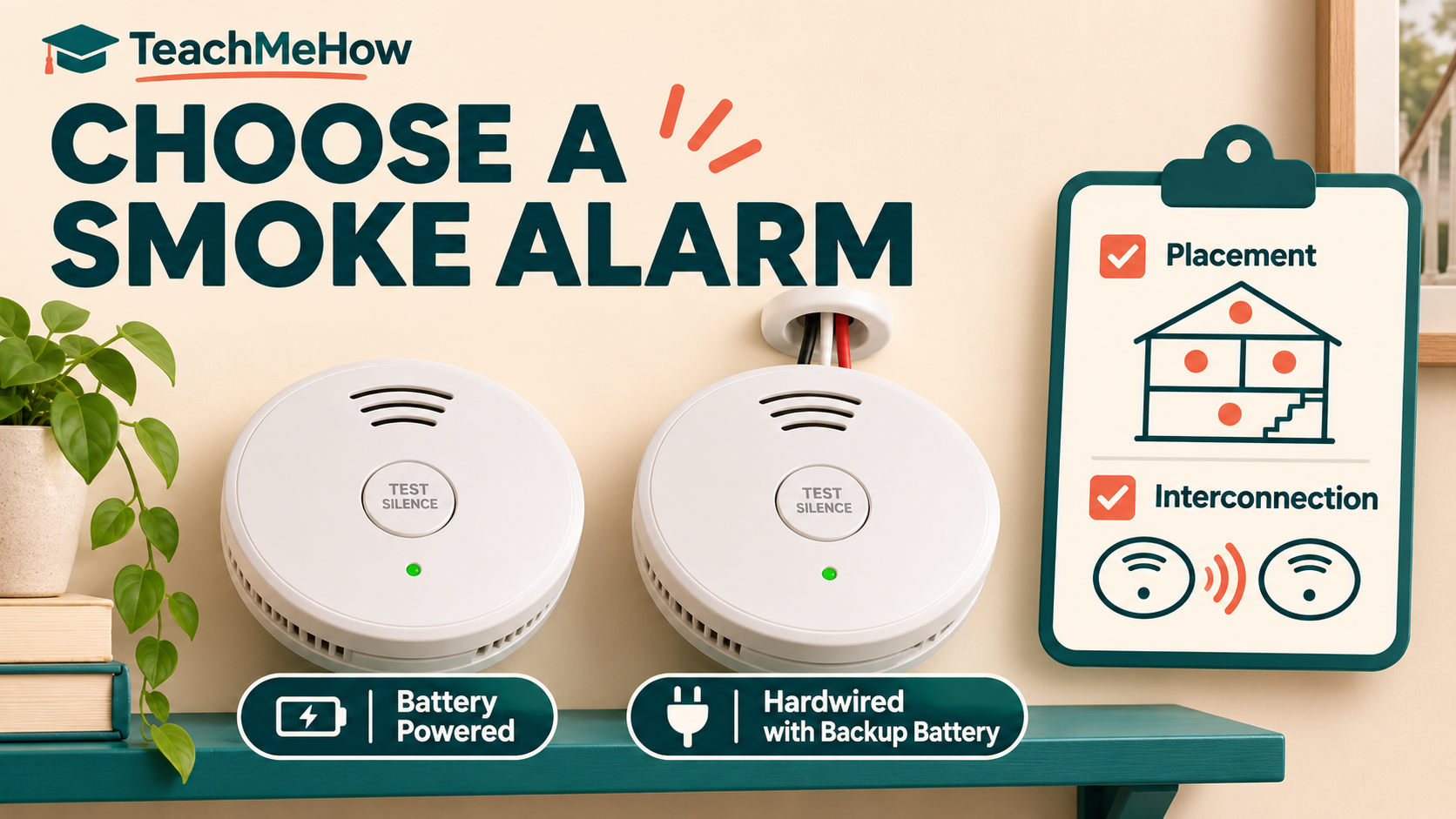
Place and mount battery-powered smoke alarms in the right rooms, test each unit, and know when hardwired installation needs an electrician.
Follow these steps at your own pace. Check product terms and prices directly with providers before purchasing.
Quick answer
Install a battery-powered smoke alarm on the ceiling or high on a wall, using its supplied mounting plate and screws. Put alarms inside bedrooms, outside every separate sleeping area, and on each level of the home; keep each unit at least 10 feet from cooking appliances and follow its manual and local code. Hardwired alarm wiring belongs to a qualified electrician.
Before you start
- Check the alarm’s manual, manufacture date, and safety mark from a recognized testing laboratory.
- Use a battery-powered alarm unless replacing an existing hardwired unit with a compatible model. Interconnection is not universal.
- Use a stable step ladder and the specified screws and anchors. In a rental, ask the landlord about required installations.
Where to place smoke alarms
Plan an alarm in every bedroom, outside each separate sleeping area, and on every level, including the basement. Ceiling mounting is preferred; for wall mounting, follow the model’s ceiling-clearance instructions. NFPA recommends at least 10 feet from cooking appliances. Avoid bathrooms and locations where the manual warns steam, drafts, or temperature extremes may interfere. Interconnected alarms help one unit alert the whole home.
Step-by-step installation
- Mark locations. Map bedrooms, sleeping areas, and every level. Use the manual’s recommended basement placement. Do not install in a garage unless the alarm is rated for it.
- Check for hidden wiring or pipes. Avoid ducts, wiring, and plumbing. If you do not know what is behind the ceiling, stop before drilling and ask a professional.
- Attach the mounting plate. Mark holes, drill pilot holes if required, install the supplied anchors, and secure the plate firmly without over-tightening.
- Power the unit. Fit the specified battery with correct polarity, or activate its sealed battery exactly as the manual directs. Hardwired units must be installed by a qualified electrician.
- Lock it in place. Align the slots and twist or slide the alarm onto its plate until it locks. Never force the housing.
- Test the alarm. Press the test button for the time given in the manual. For interconnected models, verify the other units respond as directed.
- Record its date. Note the installation date and the replacement date printed on the alarm. Keep the instructions available.
Common mistakes
- Using one hallway alarm when bedrooms need their own units.
- Mounting too close to cooking, steam, or a strong air current.
- Mixing incompatible models in an interconnected system.
- Removing a battery after a nuisance alarm and forgetting to reinstall it.
Safety and limits
This guide covers battery-powered mounting only. Do not handle household wiring or replace hardwired alarms yourself. If the unit will not lock, test, or interconnect, check its manual or contact the manufacturer. Local fire and building codes may add requirements.
Related smoke alarm guides
- How to replace a smoke alarm battery
- How to fix a smoke alarm that keeps chirping
- How to test and clean smoke alarms
- How to choose a smoke alarm
Sources: U.S. Fire Administration smoke alarm guidance and NFPA smoke alarm guidance. Follow the unit’s instructions and local requirements.
Bottom line
Install an alarm in every recommended area, mount it as its manufacturer directs, test it after installation, and keep track of its replacement date. Get professional help for hardwired work.
Comments
Comments are reviewed before they become public.
Sign in with Google to leave a comment.
Sign in with GoogleNo approved comments yet. Be the first to start the discussion.