How to Fix a Smoke Alarm That Keeps Chirping
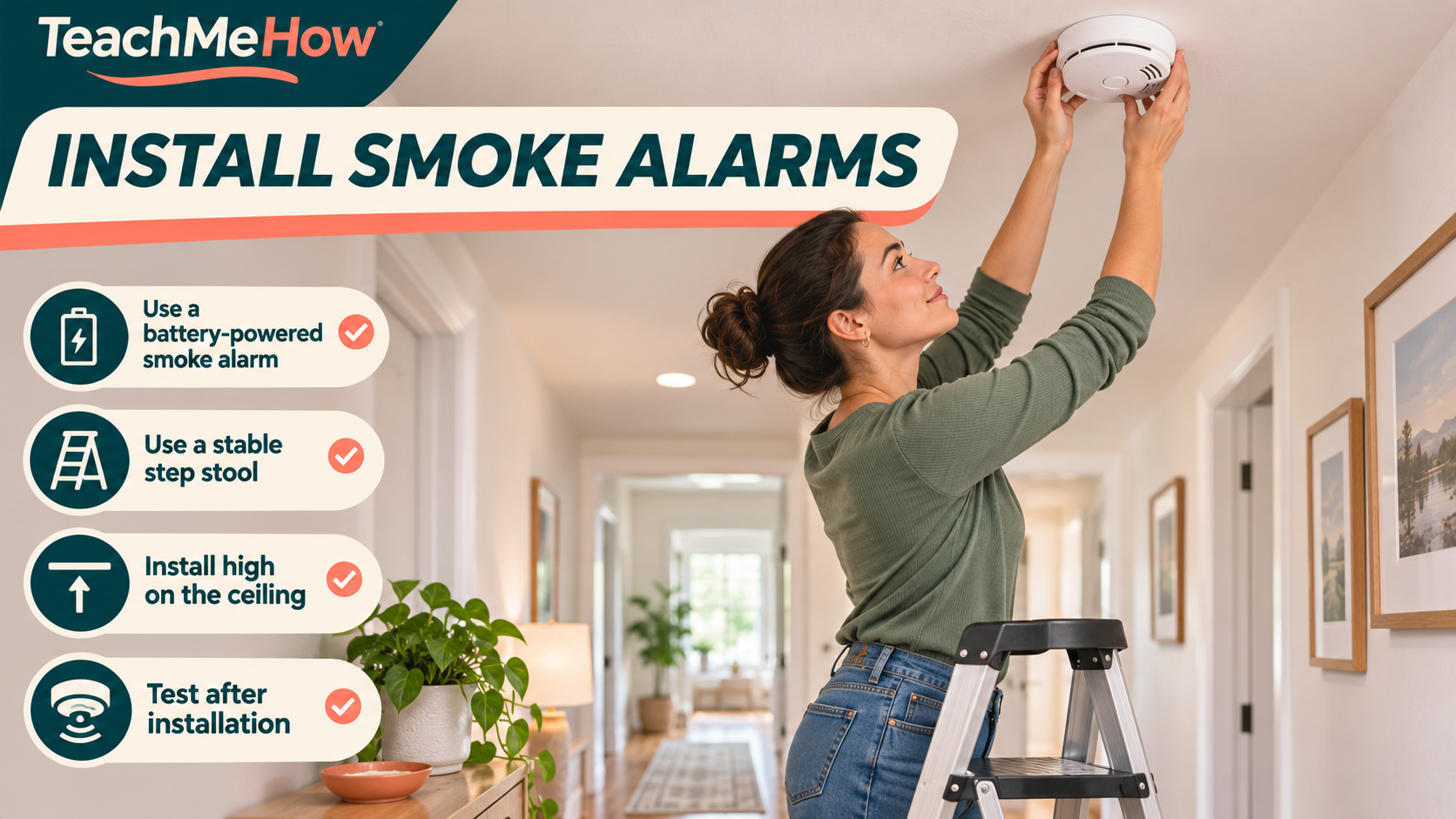
Find out whether a periodic chirp means low battery, dust, or end of life, then troubleshoot safely without disabling your smoke alarm.
Follow these steps at your own pace. Check product terms and prices directly with providers before purchasing.
Quick answer
A periodic single chirp often points to a low battery, but timing and meaning vary by model. Check its label and manual, replace a removable battery with the specified type, and clean the alarm as directed. If it is sealed, at end of life, or still chirps after a correct reset, replace it. Never leave it disabled.
First, rule out an emergency
Three loud beeps in a repeating pattern can mean smoke or fire. If you see smoke or hear a full alarm, get everyone outside, call 911, and stay out. A short chirp at intervals is often a maintenance warning, but confirm the pattern in the model’s manual. Interconnected alarms can make the source hard to identify.
Troubleshoot a periodic chirp
- Find the source. Listen near each unit and check status lights or voice messages. Do not assume the loudest-sounding alarm is the source.
- Check the date. Read the manufacture or replacement date. Many smoke alarms should be replaced at 10 years; follow the model’s stated service life if shorter.
- Replace a removable battery. Use the exact type on the label, observe polarity, close the compartment, and reinstall. Do not change a sealed 10-year battery; replace that alarm instead.
- Clean it carefully. Dust can interfere with sensing. Use only the manufacturer’s method, often a vacuum’s soft brush attachment around the openings. Do not spray liquid into the alarm.
- Reset and test. Follow the model’s reset procedure, then press the test button as directed.
- Check connected alarms. Ensure each unit is seated and powered. If chirping continues, the source may be at end of life or faulty.
Common causes
| Signal or condition | Next step |
|---|---|
| Periodic single chirp | Check battery type, compartment, age, and model code. |
| Chirp after battery change | Verify exact battery and polarity, close drawer, reinstall, and reset. |
| About 10 years old or end-of-life alert | Replace the whole alarm. |
| Nuisance alarms from cooking or steam | Use hush only as directed and review placement; never remove the battery. |
| Hardwired unit chirps or connector is loose | Follow the manual and call a qualified electrician if a wiring fault persists. |
Do not disable the alarm
Do not remove its battery, cover or paint the unit, or take it apart. If nuisance alarms happen near cooking, check placement and use the temporary hush feature only as directed. Learn how to replace the battery and test and clean the unit.
Related guides
- Install smoke alarms in your home
- Replace a smoke alarm battery
- Test and clean smoke alarms
- Choose a smoke alarm
Sources: NFPA smoke alarm guidance and U.S. Fire Administration. Follow the model manual.
Bottom line
Use the alarm’s own signal guide, restore its power, and replace it when sealed, expired, or still chirping after the manual’s troubleshooting. Evacuate immediately if the alarm signals fire.
Comments
Comments are reviewed before they become public.
Sign in with Google to leave a comment.
Sign in with GoogleNo approved comments yet. Be the first to start the discussion.