How to Choose a Smoke Alarm for Your Home
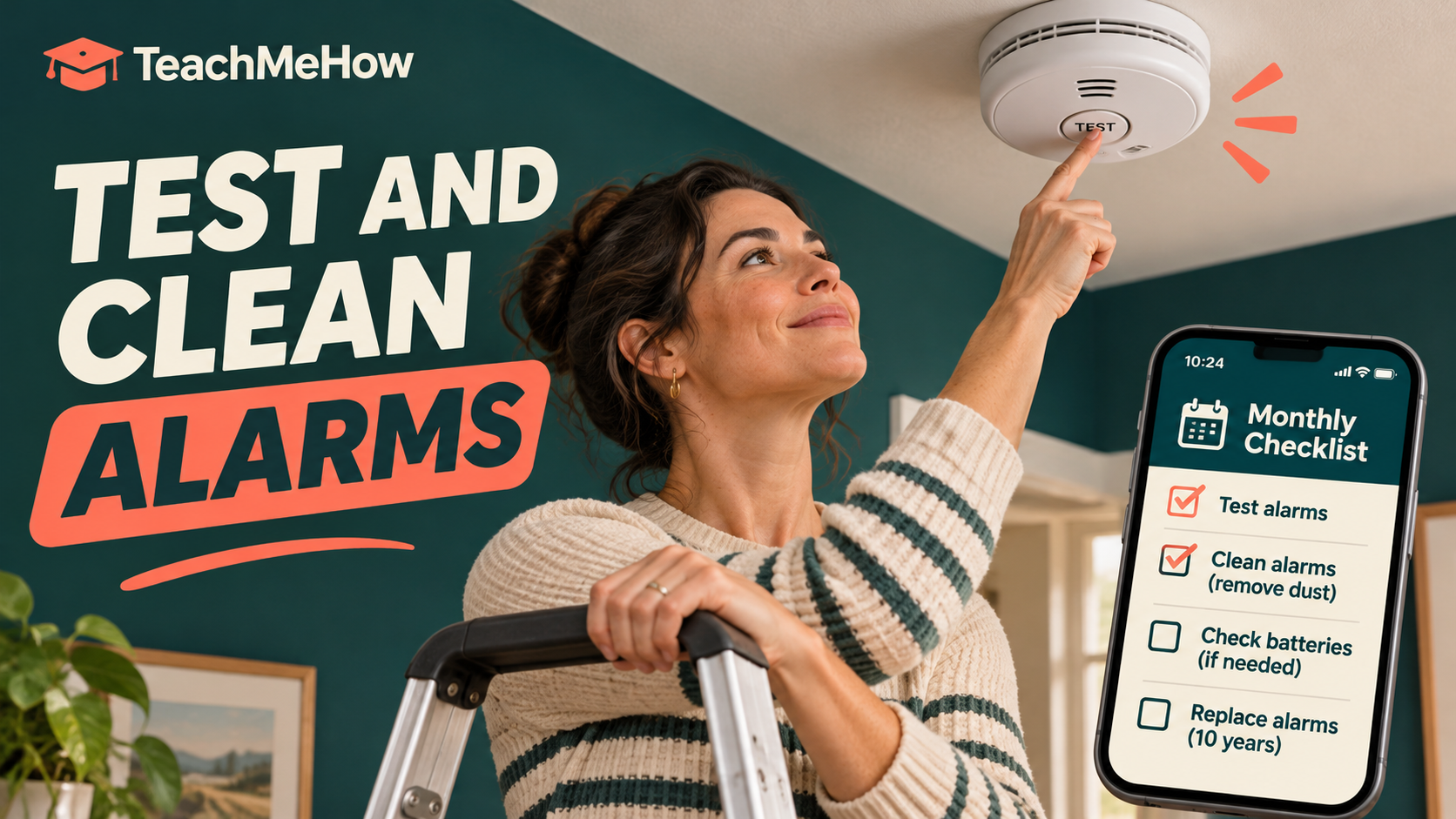
Compare alarm power, placement, interconnection, and maintenance needs before buying. Match hardwired replacements to your home’s existing system.
Follow these steps at your own pace. Check product terms and prices directly with providers before purchasing.
Quick answer: Choose a smoke alarm that fits the power and interconnection system in your home, carries a mark from a recognized testing laboratory, and can be installed in the locations required by its manual and local code. If replacing a hardwired or interconnected unit, match the system’s approved model or get compatibility confirmed by an electrician.
Compare the features that affect safety
| Decision | What to check | Why it matters |
|---|---|---|
| Power | Battery-only, hardwired with backup battery, or sealed long-life battery | Choose what your location permits and what you can maintain. A sealed battery can reduce routine battery changes, but the whole alarm still needs replacement at its end of life. |
| Interconnection | Whether alarms can sound together, and whether your existing wiring or wireless system supports it | When one alarm detects smoke, interconnected units can alert people elsewhere in the home. Existing systems may require compatible models. |
| Sensor type | Use a listed smoke alarm appropriate for the room; follow manufacturer and local fire-code guidance | Different sensing technologies respond differently to fire conditions. Don’t choose by sensor marketing alone or remove a working alarm because of nuisance alarms. |
| Controls | Test button, hush feature, visible status indicator, accessible battery compartment | Simple controls make regular testing and maintenance easier. A hush feature is for temporary nuisance alarms only and must not disable protection. |
| Listing and manual | Recognized testing-laboratory mark, installation instructions, manufacture date, replacement guidance | These help verify intended use, placement, installation, and service life. |
Match the alarm to your situation
| Your situation | What to prioritize |
|---|---|
| Replacing one battery-powered alarm | Correct mounting style, location, battery format if replaceable, and listed model. Keep required coverage in every sleeping area and on each level. |
| Replacing a hardwired alarm | System compatibility, connector and voltage requirements, and interconnection. Use the manufacturer’s replacement list or have an electrician confirm; don’t cut or alter wiring. |
| Multi-level home or sleeping areas separated by doors | Enough alarms to cover bedrooms, outside each sleeping area, and every level including the basement; consider interconnection where allowed. |
| High ceilings, unusual rooms, or local code requirements | Placement instructions, mounting limitations, and local fire/building code. Ask the fire department or a qualified installer if the location is unclear. |
Buying tips before you check out
- Count locations first. Follow the applicable fire-safety guidance and local code, rather than buying a single alarm for an entire home. USFA recommends alarms inside each bedroom, outside each separate sleeping area, and on every level.
- Keep cooking placement in mind. Follow the alarm’s manual and fire-safety guidance for distance from cooking appliances; alarms placed too close can cause nuisance alerts.
- Check exact system compatibility. A visually similar plug or connector does not prove a hardwired unit works with your circuit or interconnect system. Do not assume brands are interchangeable.
- Look at manufacture and replacement dates. Many smoke alarms should be replaced 10 years from manufacture; follow the specific manual because service life can vary.
- Consider total maintenance. Compare battery replacement schedule, sealed-battery life, cleaning directions, audible low-battery notices, and whether the test button is easy to reach.
- Treat smart features as extras. App notifications can add convenience, but keep the required local audible alarms installed and working. Confirm network and subscription needs before paying more.
- For combination smoke/CO alarms, check both labels and placement rules. A combination unit may be useful in some locations, but it does not automatically provide every smoke-alarm location needed throughout the home.
Common buying mistakes
- Buying one alarm and assuming it covers every bedroom and floor.
- Replacing a hardwired alarm with a model that cannot interconnect with the existing system.
- Choosing only by smart features, appearance, or lowest price without checking listing, instructions, placement, and replacement date.
- Assuming a sealed long-life battery means the alarm never needs maintenance or replacement.
- Moving an alarm to silence nuisance alerts instead of following the manual and correcting the cause.
Pre-purchase checklist
- Identify each required alarm location in the home.
- Record whether each existing alarm is battery-powered or hardwired and whether alarms are interconnected.
- For hardwired replacements, verify the exact compatible model before ordering.
- Confirm the alarm is appropriately listed and includes a clear manual and end-of-life guidance.
- Check the manufacture date, battery plan, mounting method, and cleaning instructions.
- After installation, test each alarm and establish a monthly reminder.
Related smoke-alarm guides
- How to install smoke alarms in your home
- How to replace a smoke alarm battery
- How to fix a smoke alarm that keeps chirping
- How to test and clean smoke alarms
Bottom line
Choose a listed alarm that fits the home’s required locations and the existing power/interconnection system. When compatibility, wiring, or local placement rules are uncertain, confirm with the manufacturer, local fire authority, or a qualified electrician before installation.
Comments
Comments are reviewed before they become public.
Sign in with Google to leave a comment.
Sign in with GoogleNo approved comments yet. Be the first to start the discussion.