How to Secure Outdoor Christmas Decorations in Windy Weather
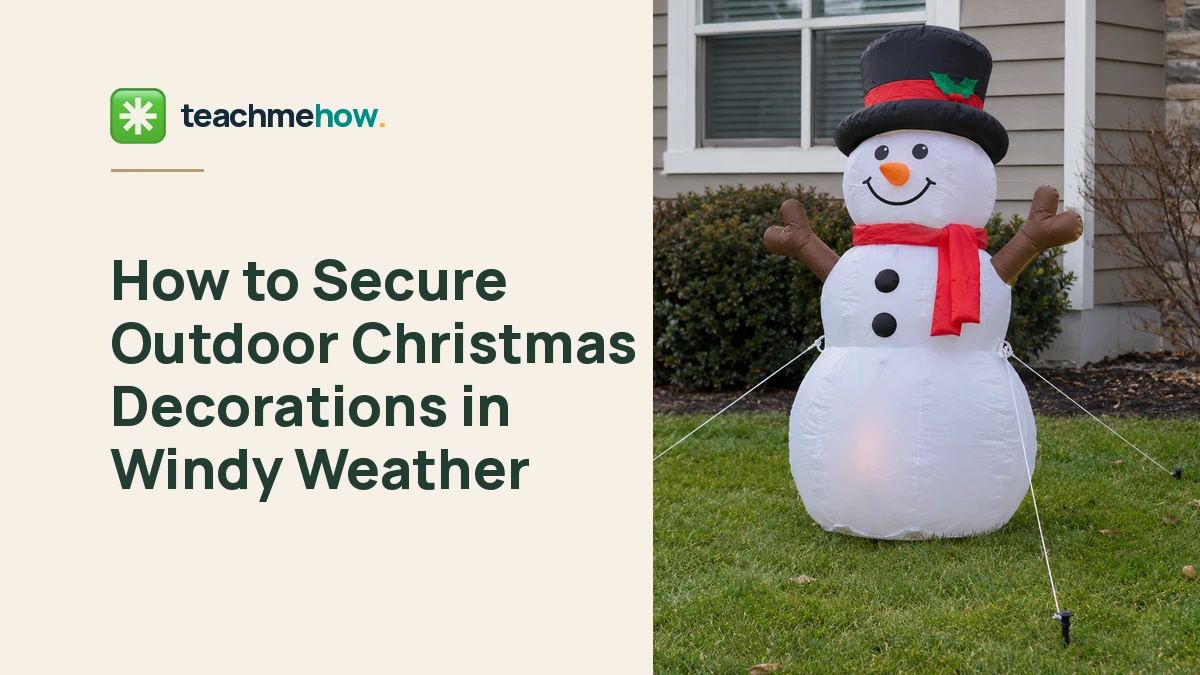
Secure outdoor Christmas inflatables and lawn figures with the right fittings. Check the site, inspect the display and know when to bring it inside.
Follow these steps at your own pace. Check product terms and prices directly with providers before purchasing.
A light-up deer can look as if it fits neatly between the front walk and the driveway. Lay its rear brace and stakes on the grass, though, and the setup may extend past the edge of the bed. An inflatable needs even more room around its base. The place where a decoration looks best from the street is only a starting point. Choose a place where the complete assembly can stand, where its cables can run, and where you can get it indoors before the weather turns.
Quick Answer
In calm weather, identify the exact model and lay out its supplied supports, stakes and tethers. Put the decoration on the surface its instructions specify, keeping every tether and cord out of walking routes. Attach each line to the designated point and check the fully assembled display for leaning or lifting. Follow the manufacturer's weather restrictions and take lightweight figures and inflatables inside ahead of strong winds. There is no single safe wind speed for every decoration.
Before you unpack the display
Set out the model instructions, base, frame or blower, supplied anchors, tethers and power supply. Have the local forecast and a place to store the decoration at hand. A phone photo of the label is handy if similar inflatables have been packed together. Check both the instructions for the figure and the markings on its electrical equipment.
Count the parts against the diagram. A loop at the base may accept a stake while a loop farther up accepts a clipped line. A wire deer may need a rear brace that looks like a spare rod until you see it in the drawing. Set aside a figure with a missing anchor, a torn sewn loop or a bent support until you can obtain the specified part. Extra lawn hardware left over from a different decoration can look very convincing laid alongside the right kit.
1. Decide whether the surface can accept the whole setup
Carry the unpowered decoration and loose parts to the proposed site. Mark its front and rear and lay out the tethers in their approximate directions. Walk the route from the sidewalk to the door and from the garage to the bins. Include the space used by visitors carrying parcels and the route a snow shovel or stroller would take.
Check what is below any proposed ground attachment. Keep clear of buried irrigation, landscape wiring, utilities and other services. If the locations are uncertain, follow your local utility-location guidance before driving anything into the ground, or choose a location and decoration that do not require staking. An anchor that stops against something hard deserves a new site assessment. Forcing it farther does not tell you what it hit.
Inspect the soil as well as the lawn surface. A frozen patch may keep anchors from seating. A saturated bed may allow a fully inserted stake to move freely. A paved porch rarely offers an attachment method intended for a lawn figure. Unless that model specifically provides a hard-surface setup, choose a different display for the porch. Avoid inventing an attachment to a railing, downspout, vehicle or loose patio furniture.
2. Match the support method to the decoration
| Display | Where to look on the model | What to check in position |
|---|---|---|
| Inflatable with a blower | Base loops, side tether loops, intake and closure zippers | All required lines reach their points, the intake stays clear, and inflated fabric is clear of branches and walls. |
| Wire-frame lighted figure | Feet, frame joints, braces and designated stake points | The whole frame is assembled and supported, including any rear leg or sleigh connection. |
| Freestanding porch display | Base and instructions for the proposed surface | The manufacturer permits the surface and provides a suitable way to secure or site it. |
| Small pieces arranged in a group | Each separate figure and any connecting cord | One figure cannot fall into another, and the connecting cord carries no load. |
A standing figure and an inflated one behave differently. A deer can rock at a loose joint while its feet stay still. An inflatable may sit on its base and still lean far enough for its fabric to rub a fence. Check both the bottom and the upper part of the assembled figure. If you are deciding what will fit a narrow bed, compare the footprints in the lighted Christmas reindeer guide.
3. Assemble the figure in the order its instructions give
For a typical lawn inflatable, identify the fan inlet, close the model's access zippers and make sure the fabric lies clear of the intake. Follow the specified order for inflation, anchoring the base and attaching upper tethers. Gemmy's Airblown instructions, for example, distinguish between the lower stake loops and the upper loops for clips. Use the layout supplied with your figure, including each attachment point and its specified direction. Gemmy's assembly instructions
Adjust paired lines in small increments. Watch the figure as you work. If tightening one line pulls the base over or pulls a sewn loop sideways into a sharp crease, loosen it and check the stake position. Tethers should steady the body in its intended shape. Pulling a line tight enough to distort the figure only transfers the load to a seam.
For a framed decoration, join and lock the sections and fit the braces before securing the feet. Check a pair of deer one figure at a time. Then look at the cable or decorative connection between them. Leave the clearance the maker requires so a connector cannot act as a tension cable. The outdoor inflatable buying guide explains how the full anchor footprint affects fit if the assembled figure proves too large.
4. Route the power separately from the anchors
Use the outdoor-rated equipment specified for the decoration and a GFCI-protected supply for outdoor holiday lights. Check for damage and route cords away from water, sharp edges, doors, vehicle paths and places people walk. Keep connections in the locations and protective arrangements their instructions allow. A cord should reach without pulling on the plug or on the display. Never use the cord to hold a figure upright. U.S. Consumer Product Safety Commission holiday guidance
Stand at the outlet and trace the route with your eyes all the way to the figure. At night a dark tether and a dark power lead can disappear against grass. Moving the whole decoration a few feet is usually a better fix than asking every guest to remember where to step. If cord length or suitability is the sticking point, use the outdoor Christmas extension cord guide before connecting the display.
5. Watch what moves and make a shutdown plan
Turn on the assembled decoration in calm conditions and observe it from the front and side. The base should sit where you set it. Watch for a lifting foot, exposed stake working loose, rubbing fabric, a stretched connector or a line edging toward a path. Switch off and disconnect safely before repositioning hardware. At the end of the check, photograph the arrangement from two sides for comparison after rain or an overnight change in conditions.
Suppose an inflatable fits an eight-foot lawn strip, but one of its upper tethers reaches across the front walk. Moving that stake next to the base may leave the line at the wrong angle. Try turning the whole setup in the available space and lay the lines out again. If the kit still needs the walkway, use a different spot or a smaller decoration. An unobstructed front door is a better result than squeezing in a larger figure.
Check the forecast before leaving the display unattended. Gemmy directs owners to avoid operating its inflatables in unusually strong winds. The National Weather Service advises securing loose outdoor items ahead of a high-wind event. While conditions are still safe, switch off, disconnect according to the manual, deflate or dismantle as directed and move loose components indoors. A deflated sheet of fabric left on the lawn can still move. During dangerous winds, stay sheltered. National Weather Service preparation guidance
Troubleshooting and common mistakes
The display leans only after rain. Switch it off and inspect the soil, every attachment and the base. Soft ground can invalidate yesterday's setup even if the figure and its lines look undamaged. Move it indoors until you have a suitable site.
The inflatable keeps folding at the middle. In calm conditions check the closures, intake and blower against the manual. A partially inflated figure will sag however carefully its tethers are arranged. Adding tension can create another problem.
One wire figure has started to rock. Check its joints and rear brace before blaming the length of its stakes. Keep a damaged figure disconnected. For a loose string on the house itself, see the separate guide to hanging Christmas lights without damaging the house.
Frequently asked questions
Can I leave a decoration outside if the wind speed is below a number I saw online?
Use the instructions for your model, the current site conditions and local weather alerts. A figure may become unstable in soft ground or in gusts funneling between buildings. An internet threshold for a different model does not establish a limit for yours.
What if my paved porch has nowhere for a stake?
Use the model there only if its instructions offer a compatible hard-surface method. Otherwise move it to suitable ground, select a porch-rated decoration with an appropriate base, or enjoy that display indoors if its labeling permits.
Final checklist
- All parts belong to this model and the installation surface is suitable.
- The complete footprint, including lines, leaves approaches and exits clear.
- Stakes, braces and loops are in the designated positions. Cords carry no load.
- The assembled display has been observed, and an indoor storage spot is ready.
- Someone knows when and how to take it down ahead of strong weather.
Bottom Line
A stable display starts with a site that accommodates every support the manufacturer supplied. Set it up in daylight, watch it run, and decide in advance where the pieces will go when the forecast changes. Moving a decoration indoors early is part of a successful installation.
Comments
Read or join the discussion.