Clean a bathroom exhaust fan safely with power isolation, gentle vacuuming, grille care, reassembly checks, and clear signs that professional help is needed.
A dusty bathroom exhaust fan can become noisy and move less air, leaving moisture on mirrors and walls for longer. Cleaning the grille and the accessible fan opening is often a manageable maintenance project, provided the unit is safely isolated and its manual permits homeowner cleaning.
The goal is to remove dust without wetting electrical parts, bending the blower wheel or disturbing wiring. This guide covers ordinary accessible ceiling fans. It does not cover electrical repair, heater servicing, duct alterations or removal of a hardwired motor assembly.
As an Amazon Associate, TeachMeHow earns from qualifying purchases.
Quick Answer: Find the fan’s instructions, isolate every power supply at the service panel and prevent accidental restart. Remove the grille as directed. Wash only removable non-electrical parts that the manufacturer allows to get wet; vacuum accessible internal surfaces gently with a soft dusting brush. Keep motors, sensors, lights and wiring dry. Reassemble completely before restoring power and checking operation.
Project at a glance
| Item | Plan for |
|---|
| DIY cost | About $0–$30 in basic cleaning supplies when a suitable vacuum and safe access equipment are already available. |
|---|
| Time | 30–60 minutes of work, plus time for any washable grille to dry completely. |
|---|
| Difficulty | Beginner maintenance when isolation and access are straightforward; professional help for uncertainty. |
|---|
| Main limit | Clean only the parts identified as accessible and serviceable in the exact model’s manual. |
|---|
Costs are illustrative planning allowances, not current product prices or service quotations. A damaged fan or inaccessible installation is a different project.
Tools and materials checklist
- The model’s current cleaning instructions and a record of the relevant breaker or disconnect.
- A stable stepladder or platform suitable for the floor and working height.
- Portable work light, eye protection and a drop cloth.
- Vacuum with a clean, soft dusting-brush attachment.
- Soft hand brush and lint-free cloths.
- Mild dish detergent and a basin for an approved washable grille only.
- Correct screwdriver if the grille uses screws, plus a small parts tray.
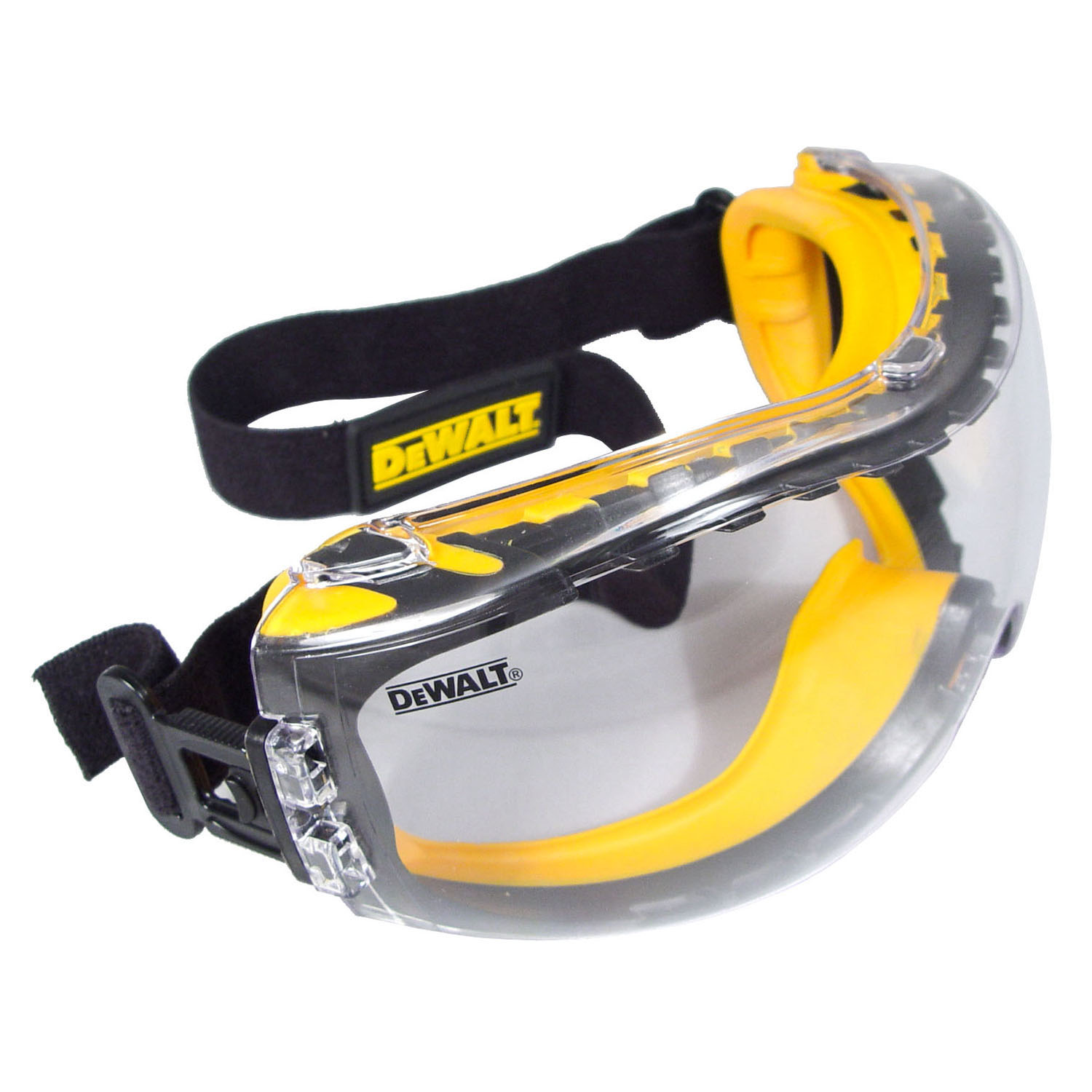
The OXO Electronics Cleaning Brush can gently dust a removed grille’s narrow slots; it is an optional detail brush, not a reason to touch electrical contacts. DEWALT DPG82-11 goggles offer eye protection during overhead dust removal. Use equipment you already own when it is suitable and in good condition.
1. Identify the fan and read its cleaning instructions
Look for the model in installation paperwork, a previous service record or an accessible label. If the label is behind the grille, first complete the power-isolation and access steps below, then obtain the instructions before going farther.
Establish whether the unit is a simple fan, a fan/light combination, a heater combination or a sensor-controlled ventilation system. The cleaning method and electrical arrangement can differ. A bathroom device described as duct-free may recirculate through a filter rather than exhaust moist air outdoors.
Use the manual’s maintenance section, not its new-installation disassembly sequence. For example, Broan’s 6714/6884 family instructions describe vacuuming the accessible interior after grille removal. Other models have different service procedures.
2. Isolate power and establish that the unit cannot restart
Turn the controls off, then switch off the correct circuit breaker or service disconnect. Identify every supply serving a combination unit; a fan, light and heater are not automatically on the same circuit. Follow the manufacturer’s lockout instructions. Where locking is unavailable, its instructions may require a securely attached warning tag; also tell everyone present that maintenance is underway.
Check the relevant wall controls after isolation to confirm the fan, light and heater cannot operate, then return the controls to off. This is a useful cross-check, not proof by itself that every internal conductor is dead. A stalled motor, failed lamp or silent non-contact detector is also not proof.
If safe isolation cannot be established, have a qualified electrician verify it before proceeding. Do not open wiring compartments or touch conductors to investigate. ESFI’s electrical-safety guidance emphasizes shutting off circuits, testing before contact and staying within your competence.
3. Set up dry, stable access
Let the fan stop completely and allow any lamp or heater to cool. Dry the floor and clear toiletries, rugs and obstacles. Place the vacuum where its cord and hose cannot trip you or pull the ladder sideways. Arrange an independent work light so losing bathroom lighting does not leave you working by feel.
Use a suitable stepladder on a firm, level surface and follow its standing-height limits. Never stand on the toilet, tub rim, sink or a loose board bridging the bathtub. If you cannot reach comfortably from a safe position, arrange professional service.
Wear eye protection before lowering the grille. Dust often falls from its upper surface even when the visible face looks clean. Keep your face away from the opening rather than working directly beneath falling debris.
4. Remove the grille using its actual release mechanism
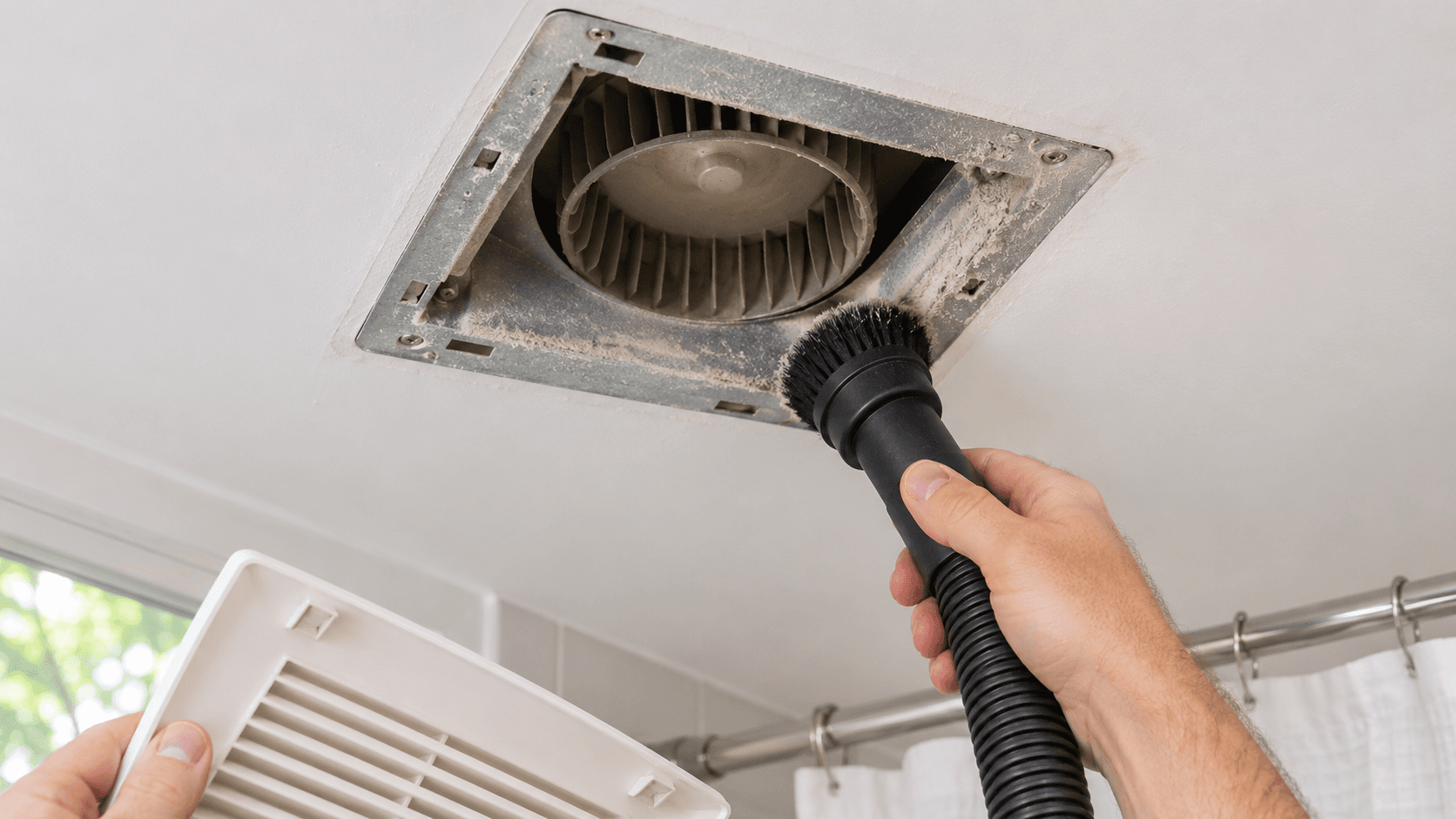
Support the grille with one hand. On common spring-mounted versions, gently lower it enough to expose the retaining springs, then squeeze the specified clips to release them. Other models use screws, hinges or latches; follow the manual rather than forcing a spring method onto every cover.
Lower the grille slowly and watch for a light, sensor or speaker connection. Do not let a wired grille hang by its leads. Disconnect only a user-service connector specifically identified by the manufacturer, with power already isolated.
If you encounter hardwired connections, brittle insulation, an unidentified plug or a grille that will not release as described, stop. The Broan ZB80M/ZB110M instructions, for example, warn against disconnecting a motor plug while the motor is spinning and require power isolation before plug handling.
5. Clean the grille according to its construction
Start by vacuuming loose dust from the removed cover. For a plain plastic grille that the manual permits washing, use lukewarm water and a small amount of mild dish detergent. Work between the slots with a soft brush, rinse as appropriate and dry thoroughly with a clean cloth. Allow trapped droplets in corners to evaporate.
| Grille type | Cleaning approach |
|---|
| Plain removable cover | Mild soap and water only when its instructions allow washing; dry fully. |
|---|
| Light or sensor cover | Follow its exact dry-cleaning and connector instructions; do not assume it can be soaked. |
|---|
| Damaged cover | Replace cracked plastic or broken retaining parts with compatible components. |
|---|
Do not use a dishwasher, boiling water, abrasive pads or solvent cleaner. Keep any electrical module out of the wash basin.
6. Vacuum the accessible dry interior gently
With the unit isolated, use the vacuum’s soft dusting brush to collect loose dust from accessible housing surfaces and the visible blower wheel. Work slowly around the opening. Support the hose so it does not strike the wheel or pull against small components.
Use only light brush contact. Do not force the wheel to spin, bend its fins or pry away firmly attached parts. Avoid compressed air, which can drive dust deeper into the motor and spin the assembly rapidly. Keep tools away from wiring, sensors and electronic boards.
This guide uses dry cleaning inside the unit. Do not spray cleaner into the housing or introduce water near the motor. The Broan 670/671/688/689 manual calls for gentle vacuuming and prohibits immersing electrical or metal components. Leave deeper disassembly to the approved model-specific service process or a professional.
7. Inspect for defects that cleaning cannot fix
Without disturbing wiring or removing additional covers, look for a cracked blower wheel, loose grille retainers, unusual rust, water stains or signs of overheating. Stop if there is melted material, damaged insulation, water entering the housing or a burnt smell.
Do not oil a noisy fan unless its manual explicitly provides for lubrication. Many bathroom-fan motors, including the cited Broan models, are permanently lubricated. Grinding or squealing that continues after cleaning needs diagnosis and compatible replacement parts.
Dust removal also cannot correct a disconnected duct, blocked exterior termination or a fan exhausting into the attic. Broan’s instructions require ducted fans to discharge outdoors. Refer inaccessible ducting, electrical faults and water-entry problems to an appropriate qualified contractor; do not climb onto a roof as an extension of this cleaning job.
8. Reassemble with every part dry and secure
Confirm that the grille is completely dry, including recessed channels and spring attachment points. Check that nothing has been left inside the housing and that the visible wheel is unobstructed.
Reconnect only the approved user-service connections you intentionally disconnected, following the manual. Do not improvise a connector, tug on leads or trap a cable between the cover and housing. If the wiring arrangement is unclear, keep power off and obtain help.
Insert springs or fasteners in their proper locations, supporting the cover until it is retained. Seat it evenly against the ceiling without bending it to hide a poor fit. Reinstall any manufacturer-required light lens or guard before operation. A dangling cover or missing guard is not ready for a test run.
9. Restore power and check normal operation
Move tools and the ladder away, confirm everyone is clear, and remove the lock or warning arrangement only when the work is complete. Restore power and operate the intended control. Allow any model-specific start delay before judging the result.
Listen for new rubbing, rattling or grinding. Turn the unit off at the breaker if it behaves abnormally, fails to start normally, smells hot or trips a protective device. Do not repeatedly reset a breaker to force the fan to run.
A lightweight piece of tissue held securely near the grille can indicate inward air movement. Keep hold of it; never feed paper into the fan or use a flame. This check does not measure cubic feet per minute or prove the duct is correctly installed. Have persistent poor airflow professionally evaluated.
10. Make a maintenance plan and track bathroom moisture
Record the cleaning date and model number. The Home Ventilating Institute recommends routine cleaning at least annually; follow a shorter interval when the manufacturer or visible dust buildup calls for one. A fan used continuously can need attention sooner than an occasionally used unit.
For ordinary intermittent bathroom ventilation, HVI recommends running the fan for 20 minutes after use. Follow the installed control strategy and local ventilation requirements; do not disable continuous or programmed whole-home ventilation settings.
If condensation continues, look beyond the grille. Leaks and condensation on exposed cold-water pipes need separate attention. A moisture-weakened wall should be repaired before remounting a loose towel bar. A well-placed water-leak sensor can help monitor an accessible leak-prone location.
Professional tips and useful alternatives
Clean the removed grille at a counter where you can see every slot, rather than scrubbing it overhead. Keep the dry interior-cleaning tools separate from the wet washing cloth. Photograph spring positions before removal if the manual’s drawing is difficult to interpret.
A vacuum with the proper dusting attachment is usually more useful than a stiff detail brush. If the wheel is heavily coated and cannot be reached safely, book service rather than probing through the opening. During broader maintenance, consider checking the HVAC filter, but do not insert filter material into a bathroom fan unless its manufacturer specifies a filter.
Common mistakes to avoid
- Using the wall switch as isolation: sensors, timers and additional circuits can complicate the supply.
- Washing an electronic grille: a light or sensor cover may require dry cleaning only.
- Scraping the wheel: damaged or unbalanced blades can create noise and require replacement.
- Spraying lubricant or disinfectant inside: follow the manual; do not introduce liquid or residue to the motor.
- Resetting controls casually: continuous ventilation may be part of the home’s required ventilation system.
DIY versus professional cleaning
| Route | Illustrative allowance |
|---|
| Accessible DIY cleaning | $0–$30 for ordinary supplies when tools and safe access are already available. |
|---|
| Routine service visit | Approximately $100–$250, depending on local minimum charges and access. |
|---|
| Repair or duct work | Separate quote; motor replacement, wiring and roof access are outside basic cleaning. |
|---|
Ask what the service includes and whether the provider is qualified for electrical or duct defects discovered during inspection. Use a licensed electrician where required for wiring work.
Frequently asked questions
Can I vacuum the fan without removing the grille?
You can remove superficial grille dust, with power safely isolated, but that does not clean the accessible housing behind it. Remove the cover only as its instructions permit.
Does every bathroom fan have a filter?
No. Many exhaust fans have no replaceable filter. Duct-free units and some specialized systems differ; identify the exact model before buying a filter.
Can I wash the blower wheel in the sink?
Not as a general method. This guide leaves the motor and wheel installed and dry. Removal and washing are allowed only if the exact manufacturer procedure explicitly permits them.
Why is the fan still loud after cleaning?
Possible causes include worn bearings, a damaged wheel, loose mounting or a restrictive duct. New or persistent abnormal noise needs inspection, not extra oil or force.
Why does my mirror still fog?
Some fog during a shower is not a precise performance test. Persistent moisture can involve airflow, runtime, replacement air, duct condition or another moisture source. Cleaning alone cannot establish the cause.
Final project checklist
- All supplies were safely isolated before opening the unit.
- Only manufacturer-approved parts were removed or washed.
- The dry interior is free of reachable dust and loose tools.
- The grille, guards and approved connections are secure.
- The fan runs normally, and unresolved moisture or defects have a follow-up plan.
Bottom Line: Safe bathroom-fan cleaning depends on confirmed power isolation, gentle dry interior cleaning and careful reassembly. A washable grille can be refreshed separately, but damaged wiring, persistent noise, water intrusion and poor duct performance need qualified attention.
Sources and further reading

Comments
Read or join the discussion.