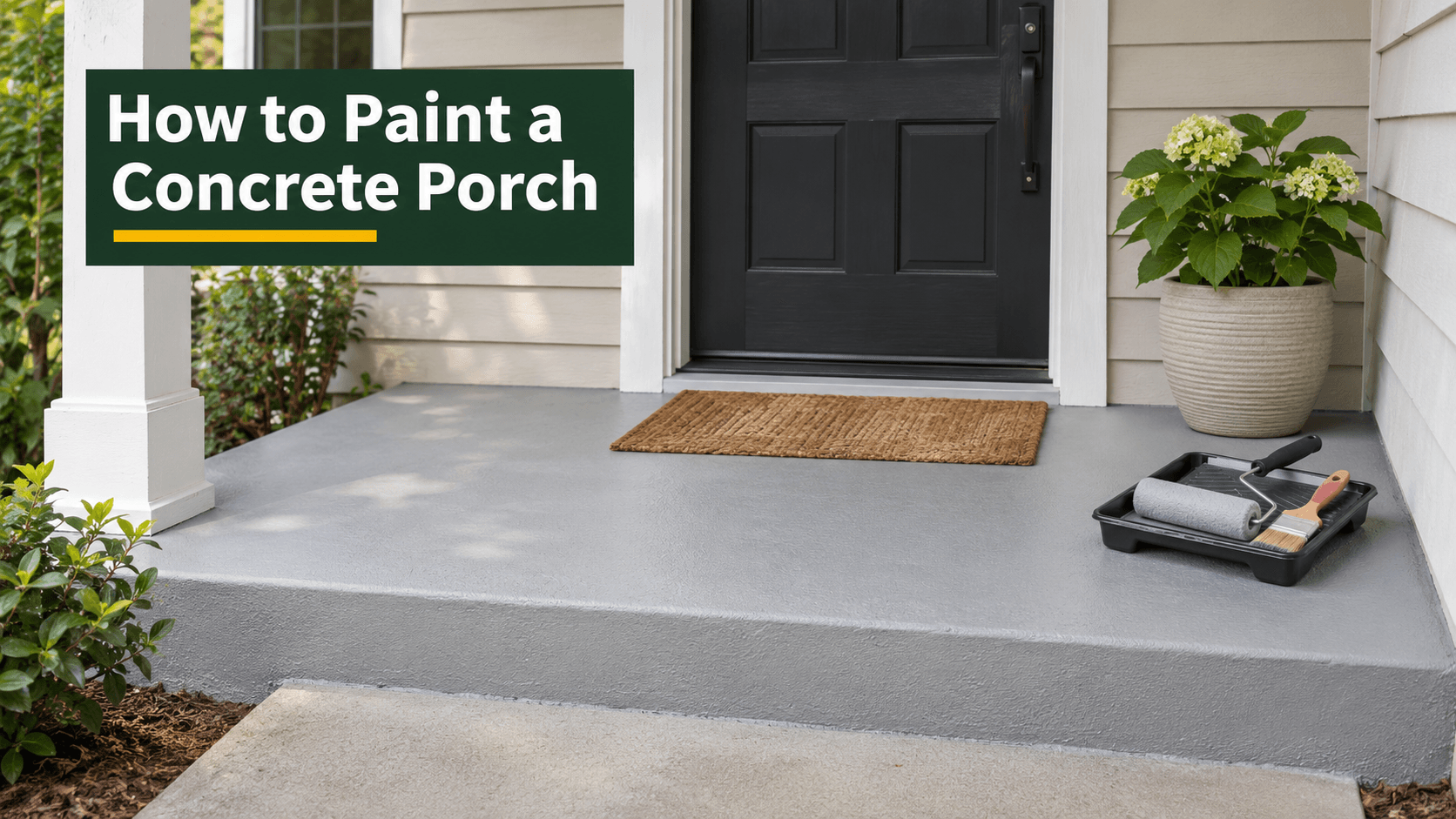
Paint a concrete porch with the right surface checks, cleaning, brush and roller method, and drying schedule for a durable, attractive outdoor finish.
Quick Answer: To paint a concrete porch, confirm that the slab is sound, dry, clean and compatible with an exterior concrete-floor coating. Prepare and test it before painting, protect adjoining surfaces, then follow that coating’s exact application and drying instructions. The DRYLOK latex method below uses a diluted, brushed first coat and a full-strength second coat. Smooth concrete needing chemical etching or mechanical profiling requires a separate, properly controlled preparation job.
A painted porch can make a tired entrance look cared for, but the finish depends more on the concrete underneath than the color on top. Paint cannot correct settlement, persistent moisture, loose concrete or a failing older coating. Covering those conditions usually postpones the real repair.
This guide covers a small, ground-supported pedestrian porch using DRYLOK Latex Concrete Floor Paint. Begin with suitably prepared bare concrete or a sound, positively identified previous coat of the same product. Raised structural slabs, waterproofed balconies and unknown coatings need specialist assessment.
As an Amazon Associate, TeachMeHow earns from qualifying purchases. The product cards recommend a compatible brush and roller frame; buy the specified coating and the correct roller cover separately.
Project cost, time and difficulty
| Item | Planning allowance |
|---|
| DIY cost | $100–$250 for a roughly 120-square-foot porch already suitable for painting; major repairs and surface profiling excluded. |
|---|
| Hands-on time | About 5–9 hours for inspection, cleaning, masking and two coats. |
|---|
| Elapsed time | Several dry days, including a 24-hour moisture check and coating dry times; preparation can extend this. |
|---|
| Difficulty | Moderate. Assessing the substrate is more demanding than spreading the paint. |
|---|
These are illustrative budgeting allowances, not current retailer prices or guaranteed contractor quotes. Keep another safe entrance available while the porch is closed.
Tools and materials checklist
- Correct exterior concrete-floor paint, its current product sheet and safety data sheet.
- Stiff nylon cleaning brush, suitable detergent or degreaser, bucket and gentle hose supply.
- Compatible washwater collection equipment and an approved disposal route.
- Tape measure, thermometer, timer, 12-by-12-inch plastic squares and sealing tape.
- Good nylon/polyester paintbrush; a Purdy XL Sprig is one suitable example.
- Roller frame, separate 1/4-inch-nap cover, tray, stirrer and clean measuring container.
- Painter’s tape, protective sheeting and barriers for the closed work area.
- Gloves, eye protection, closed footwear and any additional protection required by the actual cleaners and paint.
1. Inspect the porch and identify every existing layer
Look for movement cracks, exposed reinforcement, loose or hollow concrete, repeated dampness, white salt deposits and ponding. Check the underside if safely visible from the ground. Stop if the slab appears structurally distressed or water enters the building; paint is not a structural repair or waterproofing diagnosis.
Find the previous coating’s label, receipt or maintenance record. The current DRYLOK product sheet permits sound existing DRYLOK Concrete Floor Paint, but requires other exterior coatings to be removed. Appearance alone cannot distinguish paint from a clear sealer. Have unknown or failing coatings assessed before disturbing them. New concrete must cure at least 30 days for this system.
2. Check the weather and calculate the material
Choose a dry period with an alternate entrance and enough time for cleaning, testing and coating. Check the slab temperature as well as the air; a shaded porch can stay colder. Both must remain above 50°F during application and for four hours afterward under this product’s exterior instructions. Avoid approaching rain, overnight dew and scorching direct sun.
Measure each rectangle and add the areas, including any approved concrete faces being coated. A 10-by-12-foot floor is 120 square feet. Two coats represent 240 square feet of application; at the stated 300–400 square feet per gallon, that suggests 0.6–0.8 gallon before texture, edges, waste and a trial area. Treat this as planning arithmetic, not a promise that one can will suffice.
3. Clear, protect and isolate the work area
Remove furniture, planters and mats completely. Photograph existing defects and mark the coating boundary without changing tread or riser geometry. Protect door thresholds, siding, metal trim and adjoining paving. Leave drainage openings unobstructed.
Turn off nearby automatic irrigation so it cannot wet the porch during cleaning checks or drying. If an overspraying head needs attention, complete pop-up sprinkler replacement first. Keep children, pets and deliveries out, and tell everyone which entrance to use. Do not create a plastic-covered walking route through wet paint or obstruct the only required exit.
4. Clean thoroughly and control the washwater
Sweep away grit without raising clouds of dust. Scrub dirt, oily marks and wax with a cleaner suitable for the coating preparation, following its dilution and protection instructions. Rinse away detergent rather than letting it dry into the pores. Repeat localized cleaning when a stain remains greasy; paint should not serve as a stain detector.
Use controlled amounts of water and collect contaminated runoff. Ask the local wastewater or waste authority how to dispose of the actual cleaner and residue; a storm drain or garden bed is not a default disposal route. Never mix cleaners. Persistent biological growth or salt deposits need their moisture source addressed before painting.
5. Verify the required texture before proceeding
Clean concrete and suitably profiled concrete are different things. DRYLOK’s current exterior sheet specifies a concrete surface profile of 4 or above and describes a medium-grit-sandpaper feel. A broom pattern, an attractive photograph or a single absorbed water drop does not establish that requirement. Have the coating supplier or a preparation contractor confirm an uncertain surface against the manufacturer’s profile standard.
If bare concrete is too smooth, stop the painting sequence and arrange appropriate preparation. This guide does not provide an acid recipe or dry-grinding shortcut. The DRYLOK Etch safety sheet requires exposure precautions and retention of contaminated washwater; grinding introduces silica controls. Do not etch painted surfaces. Sound existing DRYLOK repainting follows its separate compatibility allowance.
6. Complete suitable repairs and confirm dryness
Repair limited defects with a compatible cement-based material and wait for that repair’s specified coating readiness. Small stable edge chips have their own concrete-step repair method. Moving cracks, crumbling edges and changing step dimensions need professional evaluation. Do not paint across a joint designed to move or fill it with a rigid repair simply for appearance.
After preparation and drying, tape a 12-by-12-inch plastic square tightly along all four edges for 24 hours, following DRYLOK’s moisture check. Use representative areas, including the slowest-drying location. Dampness underneath means more drying and another test. Recurrent dampness requires diagnosis. This screening check is not a guarantee against future moisture entering the slab.
7. Check absorption, trial the finish and mix correctly
On prepared bare concrete, sprinkle a few water drops in several areas. They should absorb readily under the manufacturer’s porosity check. Beading means the surface needs further assessment for contamination, sealer or inadequate preparation. Do not apply that bare-concrete absorption test as a demand to etch a sound existing paint film.
Once the surface is again dry, apply a representative trial area using the full intended preparation and coating schedule. Check appearance, drying and compatibility before committing the whole porch. Stir the paint thoroughly; combine matching-color containers if needed for consistent shade. Follow the current label if it differs from a remembered older formula, and ask the manufacturer to resolve conflicting directions before application.
8. Brush the first coat at the specified dilution
For this exterior DRYLOK method, thin the first coat with one pint of clean water per gallon of paint and apply it with a good nylon/polyester brush. Measure accurately: half a gallon of paint takes half a pint, or one cup, of water. Dilute only the first-coat portion, leaving second-coat paint full strength.
Brush the perimeter, then work manageable strips toward the exit, distributing paint into the texture without puddles. Keep a wet working edge. The Purdy XL Sprig uses the appropriate nylon/polyester bristles; its three-inch width suits a small porch but requires patience. Do not substitute a rolled first coat merely because the product also permits rolling later.
9. Apply the second coat without overbuilding it
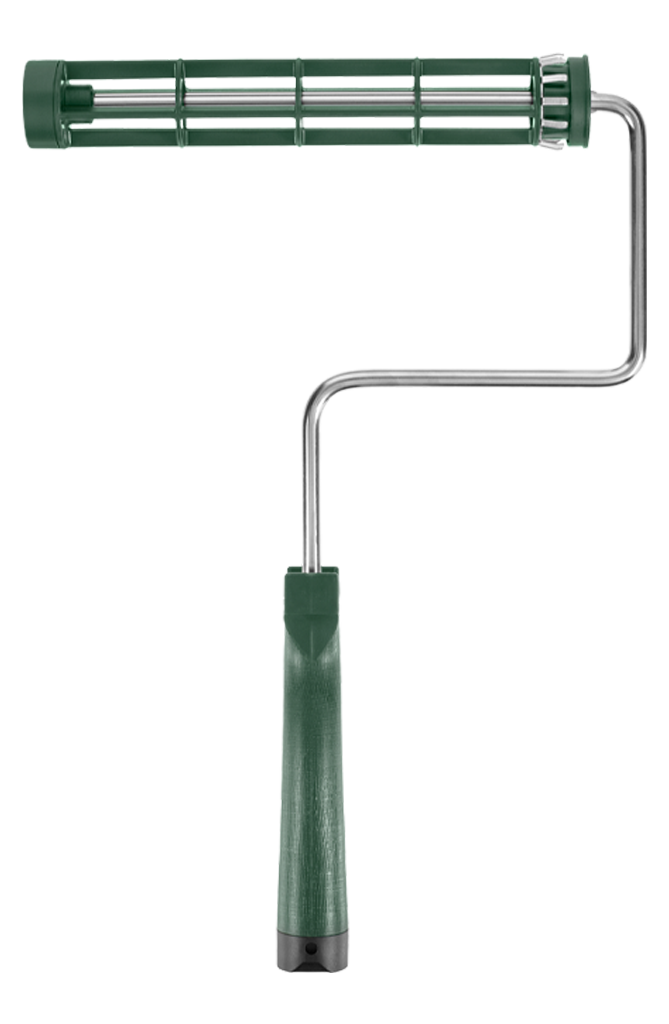
Allow the first coat at least four hours under suitable conditions, longer if it remains insufficiently dry. Stir the undiluted paint and apply the second coat by brush or a 1/4-inch-nap roller. A Wooster Sherlock frame holds the separately purchased cover; the frame itself does not determine nap thickness.
Maintain an even film and avoid repeatedly rolling partly dried sections. Two thin, properly applied coats are the specified system; flooding depressions or adding extra coats is not a repair method. Keep debris off the surface, remove masking carefully without stepping on wet areas, and protect the coating from sprinklers and unexpected rain.
10. Reopen gradually and inspect the finished surface
The manufacturer lists four hours before light foot traffic and 24 hours before heavy foot traffic, with longer drying possible in cool, humid conditions or with excessive film thickness. These milestones do not establish universal readiness for mats, furniture feet or heavy planters. Keep them off until the coating is ready for sustained contact; confirm uncertain timing with DRYLOK.
Inspect for soft patches, blistering, missed areas and water problems before restoring normal use. Keep the textured finish clean and assess traction cautiously; a non-slip product description does not guarantee footing when wet or contaminated. Plan adjacent asphalt driveway repairs separately so loose repair material and dirty footwear stay off the fresh porch.
Choose a compatible finish and preparation route
| Option | Where it fits |
|---|
| Exterior floor paint | Opaque color on a compatible, dry, properly prepared slab. The exact DRYLOK method above applies only to that system. |
|---|
| Clear sealer | Preserves concrete appearance. Use its own moisture, surface and traction rules; it is not an interchangeable paint primer. |
|---|
| Existing unknown finish | Identify it and obtain a preparation plan before coating. Do not assume any exterior paint bonds to any sealer. |
|---|
| Very smooth bare slab | Needs verified profiling before painting; professional preparation may make DIY coating practical afterward. |
|---|
Professional tips, alternatives and common mistakes
- Keep a preparation record. Note cleaner, repairs, moisture-test results, weather and coating batch. This makes future maintenance more reliable.
- Separate nearby painting jobs. A metal exterior door needs its own substrate-specific coating and preparation, even when you coordinate colors.
- Do not trap moisture for decoration. Choose compatible mats and planter supports after the finish is ready, and lift them periodically to inspect underneath.
- Avoid unapproved additions. Extra sand, generic bonding primer or a glossy clear topcoat changes the tested system. Ask the coating manufacturer before adding any of them.
- Do not chase coverage by heavy application. Thick paint can dry slowly and conceal texture. Correct the substrate first instead of trying to bury defects.
Safety and when to hire a professional
Check older coatings before scraping or sanding; EPA’s lead-safe renovation guidance explains why disturbing lead paint requires specific precautions. Use a qualified professional for suspect lead, unknown layers or extensive removal.
Concrete grinding and cutting can create respirable crystalline silica. Follow OSHA’s construction silica guidance for the applicable controls; an ordinary dust mask and open air do not constitute a preparation plan. Hire help for profiling, runoff containment, structural damage, waterproofed decks or persistent moisture. For straightforward painting, use the current paint SDS, ventilation, eye protection and suitable gloves. This is a brush-and-roller method, not spraying. Review the SDS’s personal exposure restrictions before handling, and delegate the work when they apply. Do not sand the coating or create paint mist.
DIY versus professional cost
| Approach | Illustrative allowance |
|---|
| DIY coating | $100–$250 for a small ready-to-paint porch, depending on tools, cleaner and paint quantity. |
|---|
| Prepared and painted by a pro | $450–$1,200 for a small straightforward job; minimum charges and local labor vary. |
|---|
| Removal or repair work | Separate assessment and quote for coatings, structural issues, major profiling or water problems. |
|---|
Compare written scopes, including preparation standard, waste handling, exact coating, number of coats and reopening conditions. A low coating-only quote may omit the work your slab actually needs.
Frequently asked questions
Can I paint directly over an old porch coating?
Only when the chosen manufacturer permits that exact substrate. This method allows sound existing DRYLOK Concrete Floor Paint. Unknown paint or sealer needs identification and a compatible preparation plan; a small successful-looking trial does not override a prohibited substrate.
Does every concrete porch need acid etching?
No universal rule applies across coatings and slabs. This product requires its specified exterior profile and calls for etching highly troweled or extremely smooth concrete. Do not etch painted surfaces or improvise acid work; arrange controlled preparation when the existing bare surface is unsuitable.
Is a separate primer necessary?
The selected system is self-priming on its approved prepared substrate, with the prescribed diluted first coat outdoors. That does not authorize a generic primer. Damp-surface or waterproofing combinations require their own manufacturer-approved system and investigation of the moisture source.
Will painting stop water entering the porch?
Do not use this decorative painting sequence to solve leaks. Water may enter through joints, adjacent walls, drainage defects or the slab itself. Resolve the cause first, particularly where a porch sits above occupied space.
Why is the finish peeling near the doorway?
Possible causes include contamination, incompatible old sealer, trapped moisture, insufficient profile or premature wear. Inspect the failure before recoating. Repeating paint over loose edges preserves the weak layer and usually repeats the problem.
Final project checklist
- Sound substrate, known coating history and suitable exterior profile confirmed.
- Cleaning residue removed; repairs ready and moisture checks passed.
- Safe access, weather window and washwater disposal arranged.
- First coat measured and brushed; second coat undiluted and evenly applied.
- Coating protected through drying; mats and planters returned only when ready.
- Traction, drainage and future cleaning needs reviewed.
Bottom Line: A durable painted porch starts with a compatible, correctly prepared slab. Verify the surface and moisture conditions, follow one coating system precisely, and give the finish time to become ready for use. Professional preparation is worthwhile when it resolves a condition that paint cannot.
Sources
Comments
Read or join the discussion.