Store vinyl records upright in clean sleeves with full shelf support. Keep the collection away from heat, sunlight, moisture, and pressure that can contribute to warping.
Quick Answer: Store records vertically on a sturdy shelf, supported so they do not lean, and keep them in clean sleeves in a cool, dry place away from direct sunlight, heaters, and damp areas. Avoid long-term horizontal stacks: the weight can stress lower records, and heat can contribute to warping.
Choose a suitable place
Pick a stable indoor location with moderate, steady temperature and humidity. Keep records away from sunny windows, radiators, fireplaces, hot electronics, attics, garages, damp basements, and areas with leaks. Avoid locations where the temperature changes sharply. The Library of Congress recommends cool, dry storage and storing grooved discs upright on edge.
Set up the shelf
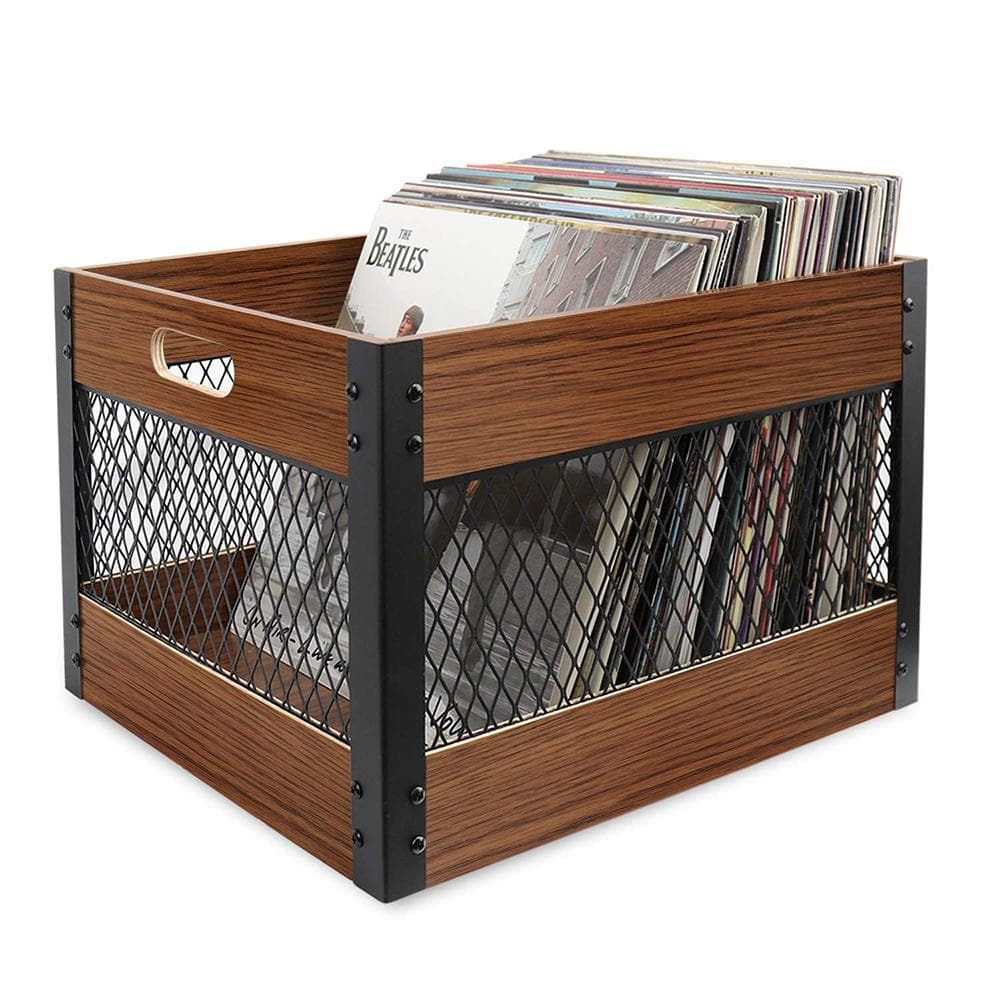
- Use a sturdy shelf or record crate sized for LPs and strong enough for their concentrated weight.
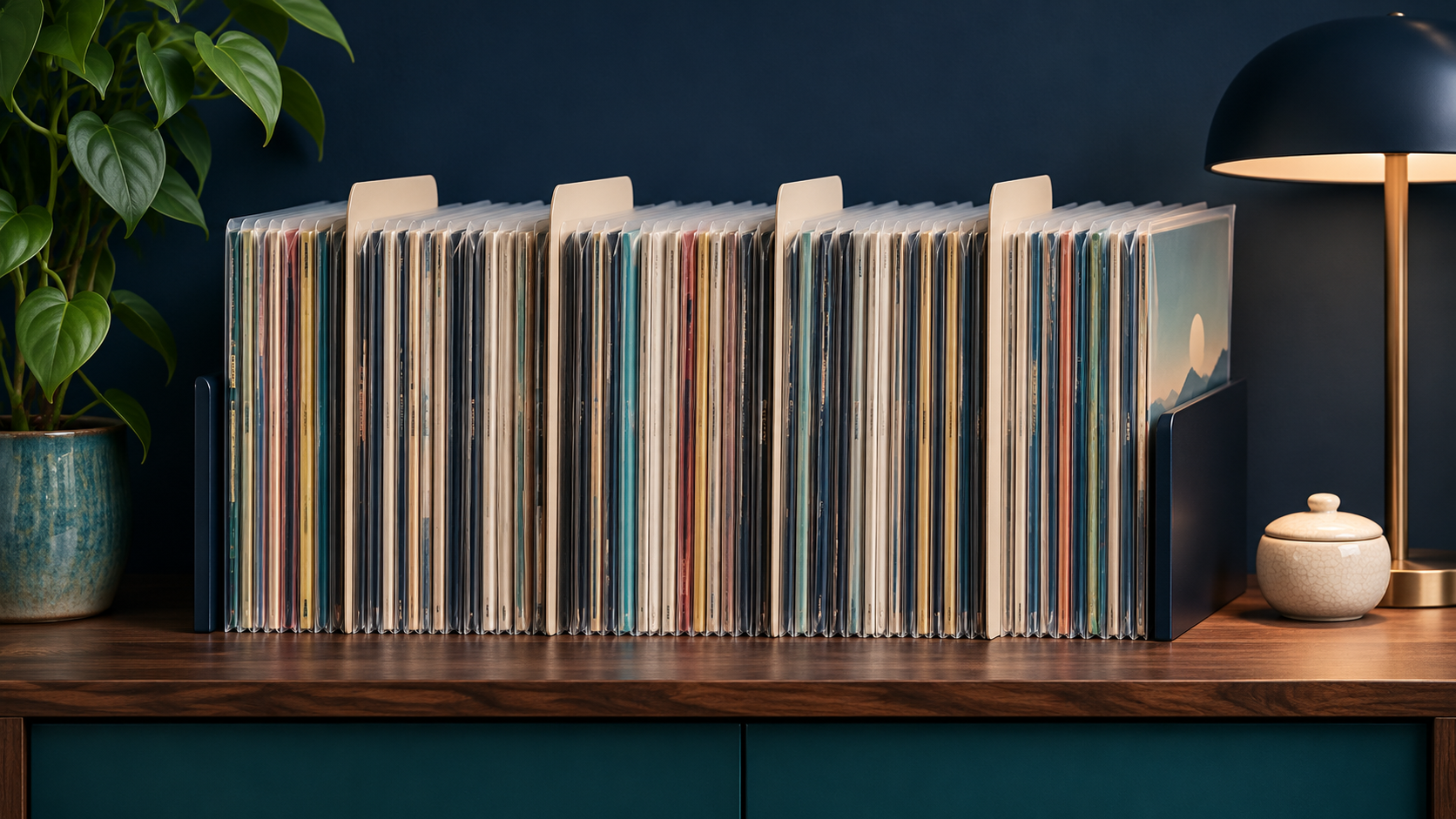
- Store records upright, with the full jacket supported by the shelf and dividers.
- Use dividers so small groups stay straight instead of leaning to one side.
- Leave enough room to remove a record without bending the jacket or scraping neighboring sleeves.
- Secure tall shelving to the wall when appropriate and keep it away from doorways or impact areas.
Step-by-step: store a record safely
- Handle by the edges and label. Keep fingers off the grooves to reduce oils and dirt on the playing surface.
- Make sure the record is dry and clean. If it was recently wet-cleaned, wait until it is completely dry before placing it in a sleeve. See the guide to cleaning vinyl records by hand.
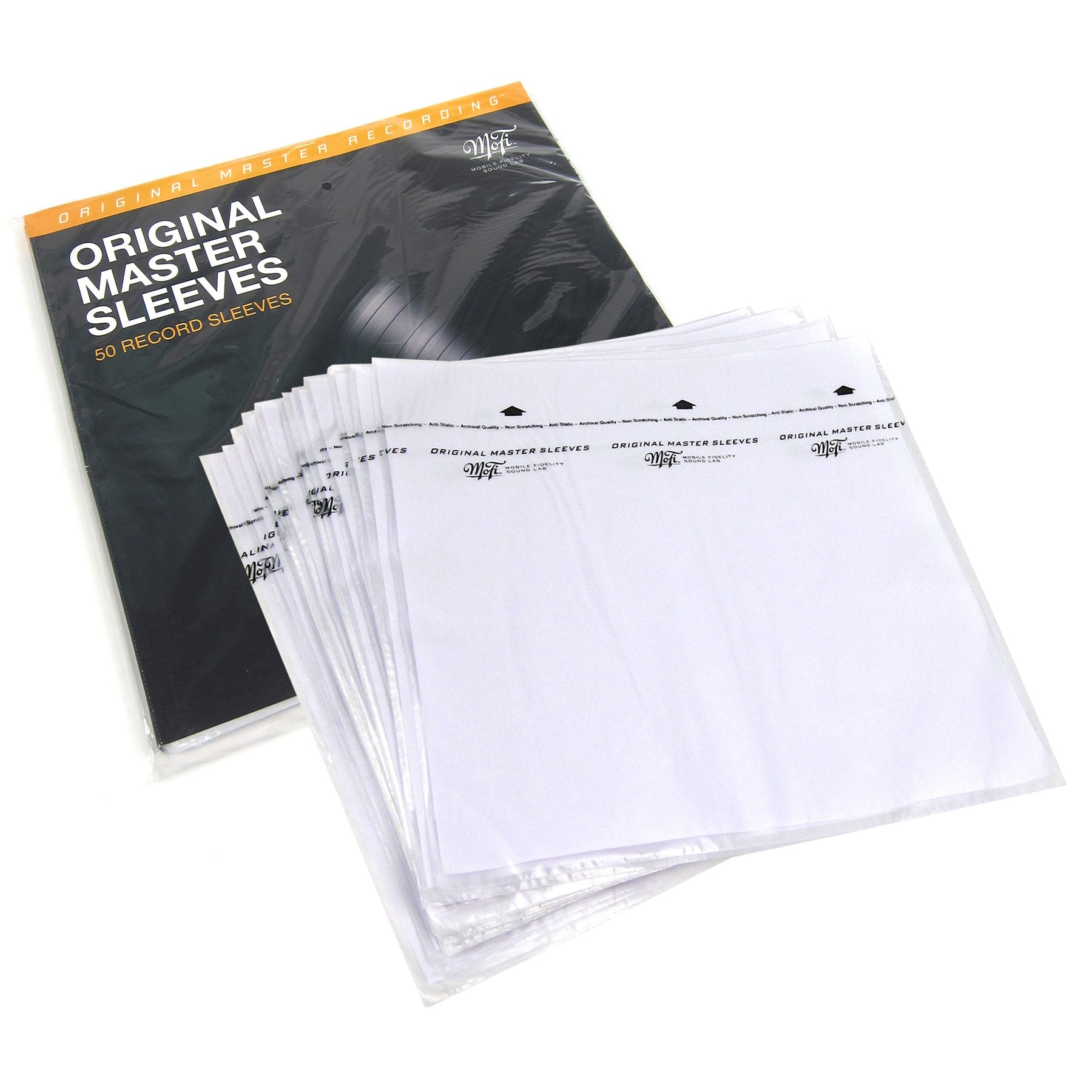
- Use a clean inner sleeve. Slide the LP into a clean sleeve without forcing it or catching the edge. If you replace a dusty or torn sleeve, keep the jacket and record aligned so the record does not rub the cover opening.
- Return the sleeved record to its jacket. Avoid leaving a record exposed on a shelf or near a turntable where dust, sunlight, or spills can reach it.
- Place it upright with support. Stand the jacket on its bottom edge, perpendicular to the shelf. Add dividers to prevent the row from leaning. Do not pack so tightly that records bow when you pull one out.
- Keep the shelf away from heat and moisture. Check nearby windows, exterior walls, vents, and plumbing. Move records if the area becomes hot, humid, or damp.
- Check the collection periodically. Look for leaning rows, overloaded shelves, dampness, dust, or jackets pressing hard against one another. Correct the support before records deform.
Common storage mistakes
| Mistake | Why it is a problem | Better approach |
|---|
| Stacking LPs flat for long periods | Weight presses unevenly and can stress jackets and discs. | Store records upright on edge with support. |
| Letting a row lean | Uneven support can encourage jackets and discs to bend. | Use dividers and fill the shelf without compressing the records. |
| Storing near a heater or sunny window | Heat can soften records and contribute to warping. | Choose a shaded area with stable indoor conditions. |
| Putting a damp record into a sleeve | Moisture can be trapped against the record and sleeve. | Let both sides dry completely before storage. |
How much room should records have?
Records should stand upright and remain supported, but still slide out without force. Do not squeeze a shelf full until the jackets bow, and do not leave a short row free to fall sideways. Add a divider or move part of the collection to another shelf when the records cannot stay straight on their own.
For routine dust before playback, use the carbon-fiber brush guide. To keep dust off your turntable between listening sessions, see the dust-cover and plinth cleaning guide.
Sources and further guidance
Bottom line: Keep records clean and sleeved, store them vertically with full support, and protect them from heat, sunlight, moisture, and pressure. Good storage reduces risk; it cannot reverse an existing warp or groove damage.
Comments
Comments are reviewed before they become public.
Sign in with Google to leave a comment.
Sign in with GoogleNo approved comments yet. Be the first to start the discussion.