Compare Y-shaped and straight swivel peelers, smooth and serrated blades, and handle shapes for the produce you prep most often.
Quick AnswerA smooth swiveling blade is a good starting point for potatoes, carrots, and apples. A Y-shaped frame makes long strokes easy to see, while a straight peeler may feel more familiar if you peel with short wrist movements. Consider a serrated blade for thin, slippery skins.
Compare Your Options
| Type | Best for | What to check |
|---|
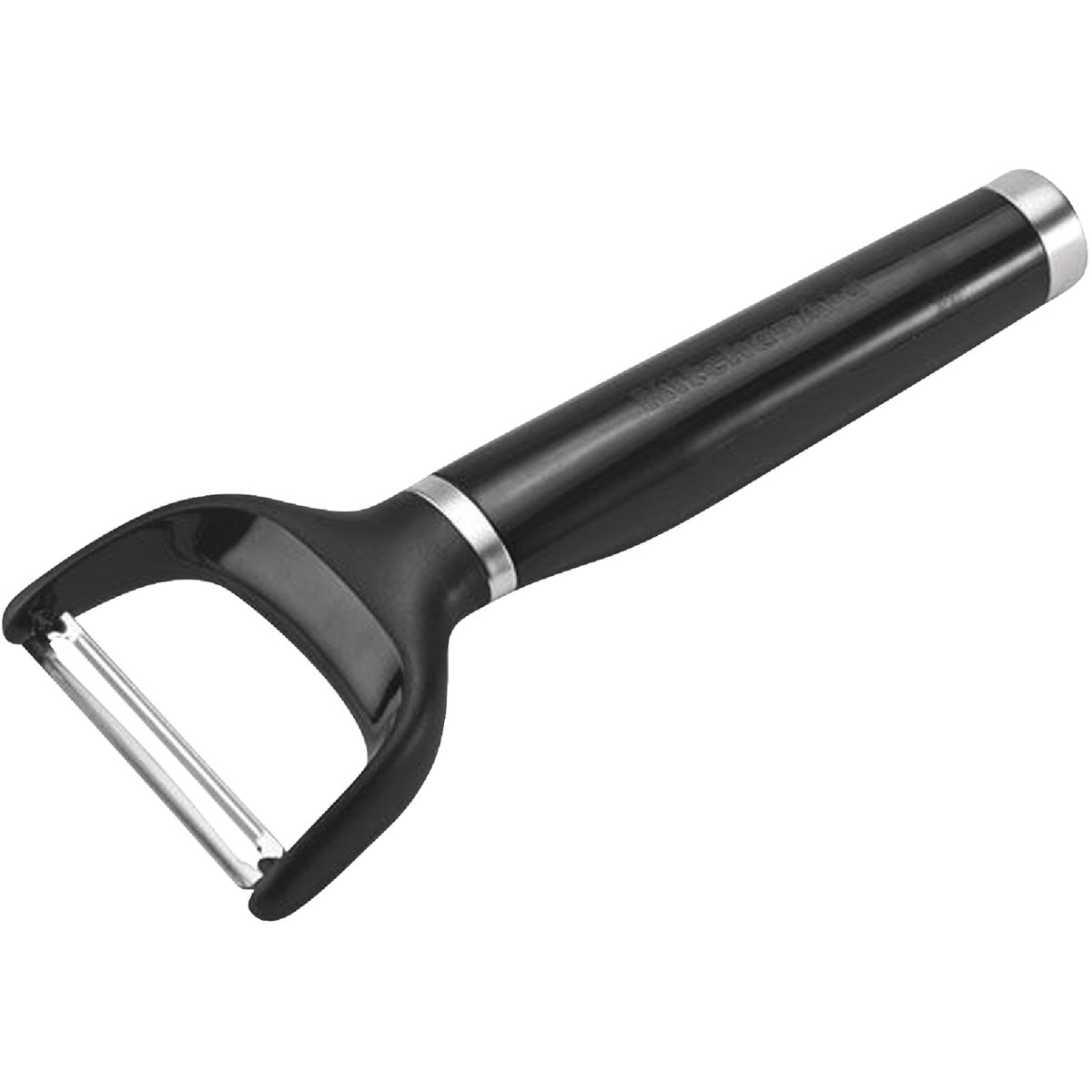
| Y-shaped smooth blade | Long carrots and broad surfaces | Blade width and how clearly you can see the cut |
| Straight swivel peeler | Short strokes around curved produce | Handle thickness and blade movement |
| Serrated peeler | Ripe tomatoes and other thin skins | Whether you want the slightly textured finish |
1. Choose the stroke that feels natural
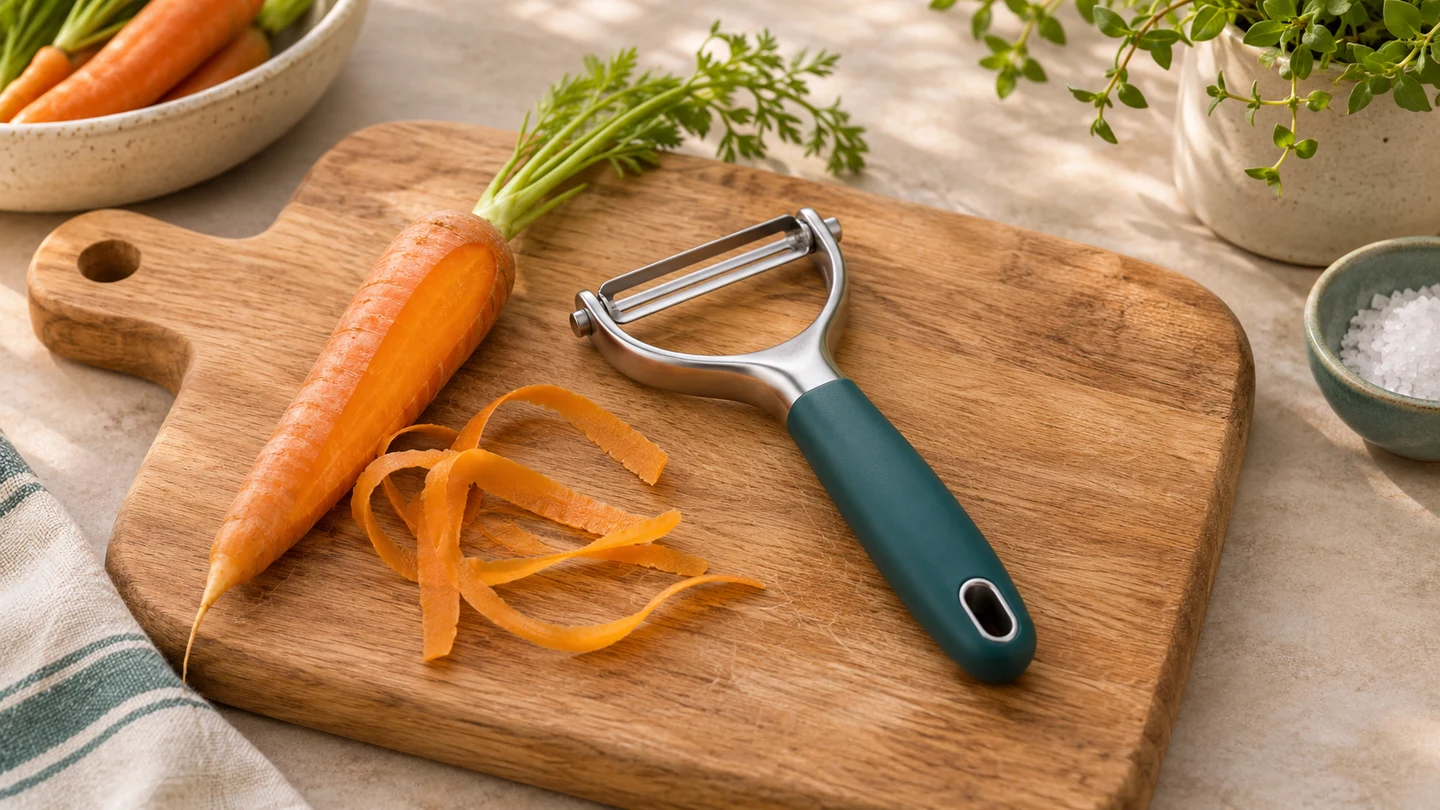
Picture peeling a potato and then a carrot. A Y peeler carries the blade across the end of the handle and gives you a broad view of the strip. A straight swivel peeler positions the blade along the handle. Both can work on curved produce; your preferred hand motion is a better buying clue than the outline alone.
2. Match the blade to the produce
A smooth edge shaves a continuous ribbon from firm produce. A serrated edge catches thin skin that a smooth blade may skate across, but it can leave shallow ridges. If you want long carrot ribbons for salad, check blade width and open space behind the blade so ribbons can clear.
3. Choose a handle and cleaning routine
A slim frame fits a crowded drawer. A fuller handle gives more contact during a batch of potatoes. Check whether the blade is carbon steel or stainless steel and follow the maker’s care directions. Dry a carbon-steel blade promptly after washing.
Buying tipLook at where the potato-eye remover sits. On some frames it is easier to use from one side, which matters if the tool will be shared by right- and left-handed cooks.
What to Choose for Your Kitchen
| When you’re cooking | Look for |
|---|
| Carrots for ribbons | A smooth Y blade with an open throat |
| Potatoes for a family meal | A comfortable handle and accessible eye remover |
| Ripe tomatoes | A fine serrated blade |
Common Mistakes
- Buying a wide blade for small, uneven vegetables without checking control.
- Treating julienne teeth as a substitute for an ordinary peeling edge.
- Dropping a bare blade into a drawer crowded with metal utensils.
Before You Buy: A Quick Checklist
- The blade suits my usual produce.
- The handle fits my preferred stroke.
- I can clean, dry, and store the blade as directed.
Bottom Line
Start with a comfortable smooth swivel blade. Add a serrated or julienne peeler when a particular ingredient or cut gives it a regular job.

Comments
Comments are reviewed before they become public.
Sign in with Google to leave a comment.
Sign in with GoogleNo approved comments yet. Be the first to start the discussion.