How to Choose the Right Rice Cooker
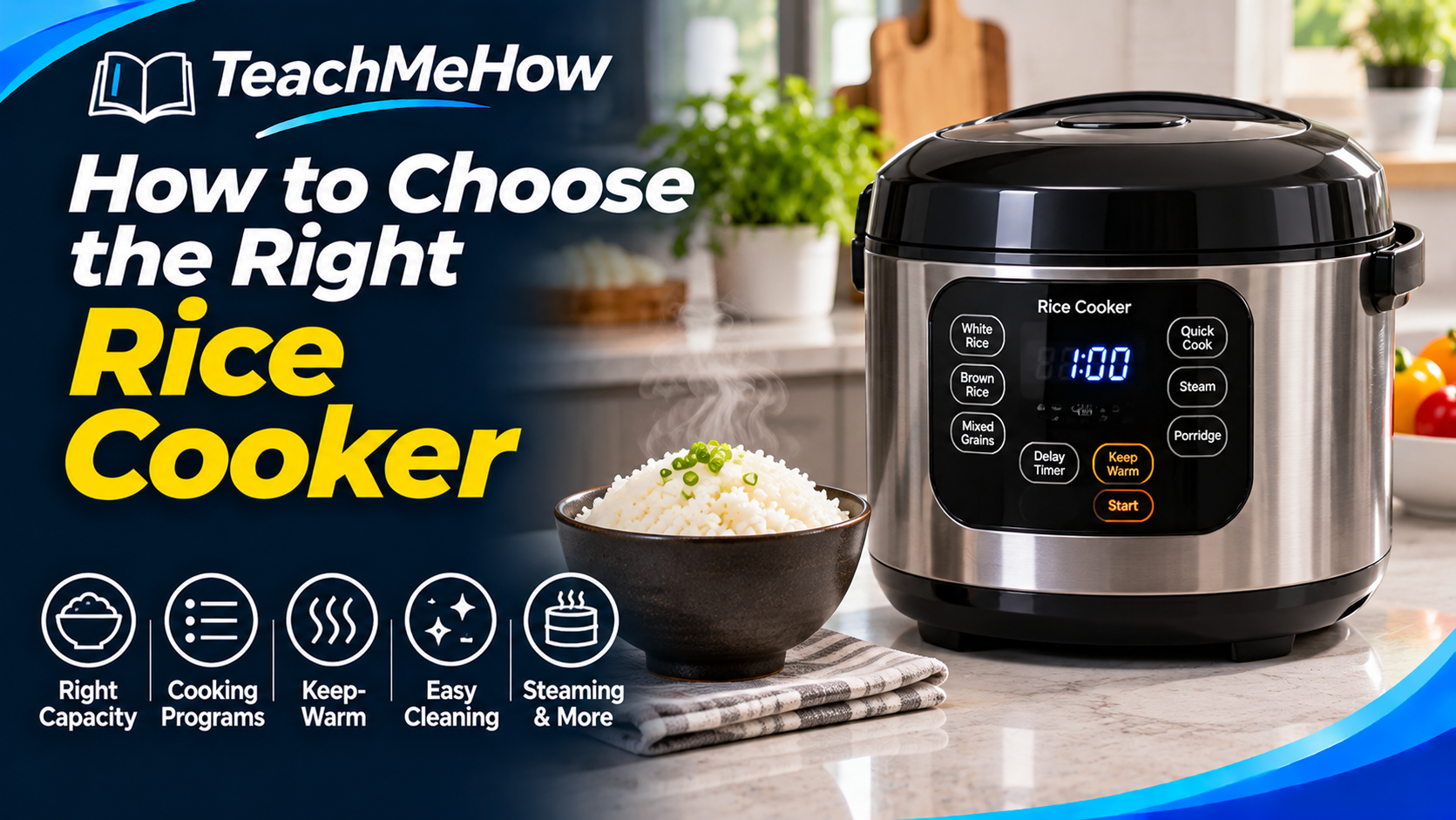
Learn how to choose the right rice cooker based on capacity, cooking programs, keep-warm performance, inner-pot quality, cleaning, timers, extra functions, and household size.
Follow these steps at your own pace. Check product terms and prices directly with providers before purchasing.
How to Choose the Right Rice Cooker
A rice cooker can make everyday cooking easier by handling time and temperature automatically. Instead of watching a pot on the stove, you add rice and water, start the cooker, and let the machine take care of the rest.
Basic models can be very inexpensive and work well for simple white rice. More advanced cookers can handle brown rice, mixed grains, porridge, steaming, delayed cooking, and other foods. The right choice depends on how much rice you make, how often you use the appliance, and whether you actually need advanced features.
Start With Capacity
Rice cookers are sold in different capacities, usually based on cups of uncooked rice. A small household may only need a compact cooker, while a larger family or anyone who meal-preps may benefit from a larger model.
It is important to remember that one cup of uncooked rice produces several servings after cooking. Buying a cooker that is far larger than you need can take up unnecessary counter space and may not perform as well with very small batches.
Think about the amount you cook most often rather than the maximum amount you might prepare once or twice a year.
Simple One-Touch Rice Cookers
Basic rice cookers usually have a single switch. You add rice and water, press the control, and the cooker automatically changes to a keep-warm mode when cooking is finished.
These models are inexpensive, easy to understand, and often very reliable. If you mainly prepare white rice and do not need advanced controls, a simple cooker may be all you need.
Advanced Digital Rice Cookers
Digital models may include separate programs for white rice, brown rice, sushi rice, mixed grains, porridge, quick cooking, steaming, and other foods.
These additional programs can be useful because different types of rice require different cooking times and water absorption.
If you regularly switch between several rice varieties, advanced controls can provide more consistent results.
What Is Fuzzy Logic?
Some higher-end rice cookers use technology often called fuzzy logic. Instead of following one fixed cooking cycle, the cooker can adjust time and temperature based on what is happening inside the pot.
For example, it may compensate for small differences in water level, room temperature, or rice quantity.
This can make the cooking process more forgiving and help produce consistent results, but it also increases the price of the appliance.
Induction Heating
Some premium rice cookers use induction heating rather than a traditional heating element beneath the pot.
Induction can heat the cooking vessel more evenly and allow finer temperature control. This can improve consistency, especially for different rice textures and grain types.
However, induction rice cookers are usually significantly more expensive. For casual rice cooking, the difference may not justify the additional cost.
Keep-Warm Performance
One of the most useful rice-cooker features is automatic keep-warm mode. After cooking finishes, the machine reduces heat and holds the rice at a serving temperature.
A good keep-warm system should prevent the rice from becoming excessively dry or developing a hard layer at the bottom.
If your family eats at different times or you prepare rice earlier in the day, keep-warm performance can be just as important as the initial cooking quality.
Extended Keep-Warm Modes
Some advanced cookers include an extended or low-temperature keep-warm setting designed for longer holding periods.
This can be useful if you frequently keep rice ready for several hours, but rice quality will still decline eventually. Freshly cooked rice generally has the best texture.
The Inner Pot Matters
The inner cooking pot is one of the most important parts of the rice cooker. Look at its material, thickness, coating, handles, and overall construction.
Heavier pots can distribute heat more evenly, while nonstick coatings make cleanup easier and reduce rice sticking to the bottom.
Check whether replacement inner pots are available because the pot is one of the components most likely to wear over years of use.
Be Careful With Nonstick Coatings
If your rice cooker has a coated inner pot, avoid using metal utensils that can scratch the surface.
Many manufacturers include a plastic rice paddle for this reason.
If the coating becomes badly damaged, replacing the pot is usually preferable to continuing to use a heavily scratched surface.
Removable Inner Lids
Steam and starch can collect on the underside of the lid. A removable inner lid makes it much easier to wash these surfaces thoroughly.
This is an important feature if you use the rice cooker frequently because residue can build up over time.
Steam Vent Cleaning
The steam vent also needs regular cleaning. Rice starch can accumulate inside the vent and surrounding components.
Look for a design where the steam vent can be removed without complicated disassembly.
A cooker that is easy to clean is much more pleasant to own long term.
Delay Timer
A delay timer allows you to load the rice cooker in advance and choose when the rice should be finished.
This can be useful if you want rice ready when you return home or at a specific dinner time.
Follow food-safety recommendations and the manufacturer's instructions when using delayed cooking, particularly when recipes include ingredients other than dry rice and water.
Quick-Cook Mode
Some rice cookers offer a faster cooking program for times when convenience is more important than achieving the absolute best texture.
This can be helpful for busy evenings, although quick cooking may produce slightly different results from the standard cycle.
Brown Rice Programs
Brown rice generally takes longer to cook than white rice because the outer bran layer remains intact.
A dedicated brown-rice program can adjust the soaking and cooking process automatically.
If brown rice is a regular part of your diet, this feature may be more useful than many of the less common specialty settings.
Mixed Grains and Other Rice Types
Some households regularly prepare jasmine rice, basmati rice, short-grain rice, wild-rice blends, quinoa, or other grains.
Check whether the cooker includes programs or manufacturer instructions for the grains you actually eat.
A machine with dozens of settings is not necessarily better if most of them will never be used.
Steaming Functions
Many rice cookers include a steaming tray or basket that sits above the rice pot.
This allows you to steam vegetables, dumplings, fish, or other foods while using the appliance.
Some models allow steaming at the same time rice is cooking, which can make simple one-appliance meals easier.
Porridge and Slow-Cooking Functions
Advanced rice cookers sometimes include settings for oatmeal, porridge, soup, or slow cooking.
These features can add flexibility, but a rice cooker does not always replace a dedicated slow cooker or multicooker for every recipe.
Consider whether you will realistically use the additional functions before paying extra for them.
Controls and Display
A simple cooker may have only one physical switch, while advanced models can have several buttons and a digital display.
Look for controls that are clearly labeled and easy to understand. A complicated interface can make an otherwise excellent appliance frustrating to use.
If you cook early in the morning or late at night, a readable display and clear indicators can be helpful.
Consider Counter Space
Rice cookers can be larger than they appear in product photos, especially high-capacity and induction models.
Measure the intended location before buying and remember that the lid may need additional vertical clearance to open fully.
If you plan to store the appliance in a cabinet between uses, check its weight and dimensions.
Detachable Power Cord
A detachable cord can make storage easier and help keep the counter organized.
Some people prefer fixed cords because there is no separate part to misplace. This is a small feature, but it can matter depending on how you store the appliance.
Replacement Parts
Before buying an expensive cooker, check whether replacement inner pots, lids, steam vents, seals, and accessories are available.
A premium rice cooker can last for many years, and being able to replace worn components can extend its useful life significantly.
Common Rice Cooker Buying Mistakes
One common mistake is buying a cooker that is much larger than the household actually needs. This wastes storage space and may make small batches less convenient.
Another mistake is paying for many advanced cooking programs that will never be used.
People also sometimes focus on the cooking technology while overlooking how difficult the lid, steam vent, and inner components are to clean.
Finally, check replacement-part costs before buying a premium model. A replacement inner pot can sometimes be surprisingly expensive.
Which Rice Cooker Is Right for You?
If you mainly cook white rice and want simplicity, a reliable one-touch rice cooker may be the best value.
If you frequently prepare brown rice, mixed grains, or different rice varieties, a digital model with dedicated programs can make cooking more consistent.
Families that keep rice warm for long periods should pay special attention to keep-warm performance, while frequent cooks may appreciate a removable lid and easy-to-clean steam vent.
Enthusiasts who care deeply about rice texture may find fuzzy-logic or induction models worthwhile, but most households do not need the most expensive technology to make good rice.
What to Compare Before Buying
- Cooker capacity
- Minimum and maximum batch size
- One-touch versus digital controls
- White-rice program
- Brown-rice program
- Mixed-grain options
- Fuzzy-logic technology
- Induction heating
- Keep-warm performance
- Extended keep-warm mode
- Quick-cook setting
- Delay timer
- Steaming capability
- Inner-pot construction
- Nonstick coating quality
- Removable inner lid
- Steam-vent cleaning
- Control-panel usability
- Overall dimensions
- Replacement-part availability
- Warranty and total price
The best rice cooker is not necessarily the model with the most programs or the most advanced technology. A cooker that matches your normal serving size, prepares the types of rice you actually eat, keeps them warm properly, and is easy to clean will usually provide the best long-term value.
Comments
Comments are reviewed before they become public.
Sign in with Google to leave a comment.
Sign in with GoogleNo approved comments yet. Be the first to start the discussion.