How to Choose the Right Portable Air Conditioner
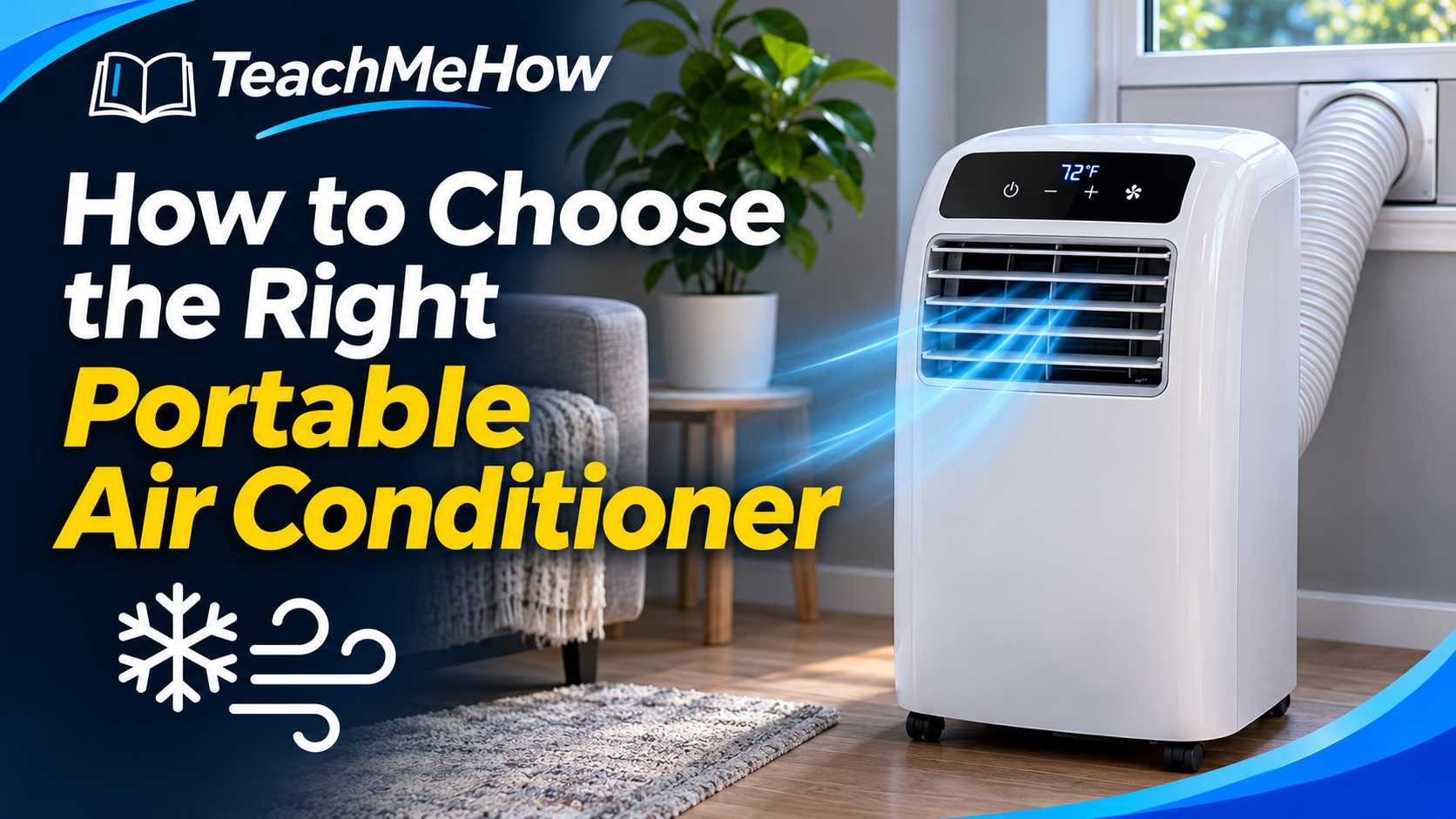
Learn how to choose the right portable air conditioner based on room size, cooling capacity, hose design, noise level, drainage, energy efficiency, and window setup.
Follow these steps at your own pace. Check product terms and prices directly with providers before purchasing.
How to Choose the Right Portable Air Conditioner
A portable air conditioner can be a practical way to cool a bedroom, home office, apartment, or other room where central air conditioning is unavailable or too expensive to run. Unlike a window air conditioner, a portable unit sits inside the room and sends hot air outside through an exhaust hose.
The convenience is appealing, but portable air conditioners vary considerably in cooling performance, noise, efficiency, drainage, and installation requirements. Choosing the right model means matching the unit to the room rather than simply buying the one with the highest number on the box.
Start by Measuring the Room
Room size is one of the most important factors when choosing a portable air conditioner. A unit that is too small may run continuously and still fail to make the room comfortable. A unit that is unnecessarily large can cost more, take up more space, and cycle on and off more frequently.
Measure the length and width of the room and calculate the approximate square footage. Also think about ceiling height, direct sunlight, large windows, heat-producing electronics, and how many people normally use the space.
A sunny upstairs bedroom may need more cooling than a shaded room of the same size.
Understand Cooling Capacity
Portable air conditioners are usually rated in BTUs, or British thermal units. Higher BTU ratings generally indicate greater cooling capacity, but portable-air-conditioner ratings can be confusing because more than one testing method has been used over the years.
When comparing units, make sure you are comparing the same type of rating. Do not assume that two large BTU numbers from different labels represent identical real-world cooling ability.
The most useful approach is to look at the recommended room size together with the standardized cooling rating and independent performance reviews.
Single-Hose Versus Dual-Hose Designs
Most portable air conditioners use either a single-hose or dual-hose system.
A single-hose unit takes air from inside the room, cools part of it, and exhausts hot air outside through one hose. These models are common, simple to install, and often less expensive.
A dual-hose system uses separate paths for intake and exhaust air. This design can reduce the amount of outside air being pulled back into the room and may provide better efficiency in some situations.
If you are cooling a larger room or running the unit for long periods, it can be worth comparing dual-hose models.
Noise Matters More Than You May Expect
Unlike central air conditioning, the compressor and fan of a portable air conditioner are inside the room with you. That means noise can become important, especially in bedrooms, offices, or rooms used for television and conversation.
Manufacturers may publish decibel ratings, but the character of the sound matters too. Some units produce a steady fan noise, while others may have noticeable compressor cycling or vibration.
If the unit will run while you sleep, look for a sleep mode or lower fan setting and check real-world reviews that discuss nighttime noise.
Check the Window Kit Before Buying
Portable air conditioners still need to send hot air outside. Most include a window kit that holds the exhaust hose in place.
Before purchasing, check whether the kit works with your window style and opening dimensions. Sliding windows, horizontal windows, and unusual window shapes can require different installation methods.
Also check the maximum hose length. Stretching or sharply bending the exhaust hose can reduce performance and increase heat buildup.
Drainage and Condensation
Air conditioners remove moisture from the air while cooling. Some portable units evaporate much of this moisture and send it outside with the exhaust air. Others may collect water internally and require occasional draining.
In humid conditions, even a self-evaporating unit may need more frequent drainage.
Check whether the model supports continuous drainage through a hose if you expect to use it for long periods.
Thermostat and Operating Modes
A built-in thermostat allows the unit to cycle automatically once the room reaches the selected temperature. This can be more comfortable and efficient than running at full power continuously.
Useful operating modes may include fan-only operation, dehumidification, sleep mode, automatic fan speed, and programmable timers.
Do not choose based on the number of modes alone. Reliable temperature control and easy-to-use settings are more important than a long feature list.
Energy Efficiency and Operating Cost
Portable air conditioners can use a significant amount of electricity, especially during hot weather. Compare energy-efficiency information and estimated power consumption when choosing between similar models.
A timer can help reduce unnecessary use, and a thermostat can prevent the unit from running continuously after the room reaches a comfortable temperature.
Closing doors, blocking direct sunlight, and sealing gaps around the window kit can also improve performance.
Consider the Physical Size
Portable air conditioners are usually larger than they appear in product photos. They need floor space inside the room and enough clearance around the intake and exhaust areas.
Most units have wheels, but weight still matters if you plan to move the machine between rooms or store it seasonally.
Measure the intended location before buying and make sure the exhaust hose can reach the window without creating a tight bend.
Portable Does Not Mean Vent-Free
A common misunderstanding is that a portable air conditioner can cool a room without venting outdoors. A true air conditioner removes heat from the room, and that heat must be sent somewhere else.
Devices marketed as vent-free air coolers are generally evaporative coolers rather than traditional air conditioners. They work differently and may not provide the same cooling effect, particularly in humid conditions.
Common Portable Air Conditioner Buying Mistakes
One common mistake is buying only by the largest advertised BTU number. Another is overlooking the window kit and discovering that it does not fit the intended window.
People also underestimate noise because the compressor is located inside the room. For bedrooms and offices, noise can be just as important as cooling capacity.
Another mistake is placing the unit too far from the window and stretching the exhaust hose to its maximum length. Shorter, straighter exhaust routing usually helps performance.
Which Portable Air Conditioner Is Right for You?
For a bedroom or office, look for a properly sized unit with quiet operation, a reliable thermostat, and a window kit that fits your setup. For larger spaces or heavy use, a dual-hose design may be worth considering.
If moisture is a major issue, pay extra attention to drainage. If the unit will be moved regularly, size, weight, and wheel design become more important.
The best portable air conditioner is not necessarily the most powerful model available. It is the one that can cool your specific room effectively without creating unnecessary noise, installation problems, or operating cost.
What to Compare Before Buying
- Recommended room size
- Cooling capacity
- Single-hose versus dual-hose design
- Noise level
- Window-kit compatibility
- Exhaust-hose length
- Condensation and drainage system
- Thermostat accuracy
- Sleep and timer modes
- Energy efficiency
- Physical size and portability
- Warranty and total price
A portable air conditioner can be a useful solution when permanent air conditioning is not practical. Taking a few minutes to match the unit to the room and installation conditions can make the difference between a machine that genuinely cools the space and one that runs constantly without delivering the comfort you expected.
Comments
Comments are reviewed before they become public.
Sign in with Google to leave a comment.
Sign in with GoogleNo approved comments yet. Be the first to start the discussion.