Compare mesh and compression packing cubes by suitcase fit, zipper design, packed depth, and the clothes you carry.
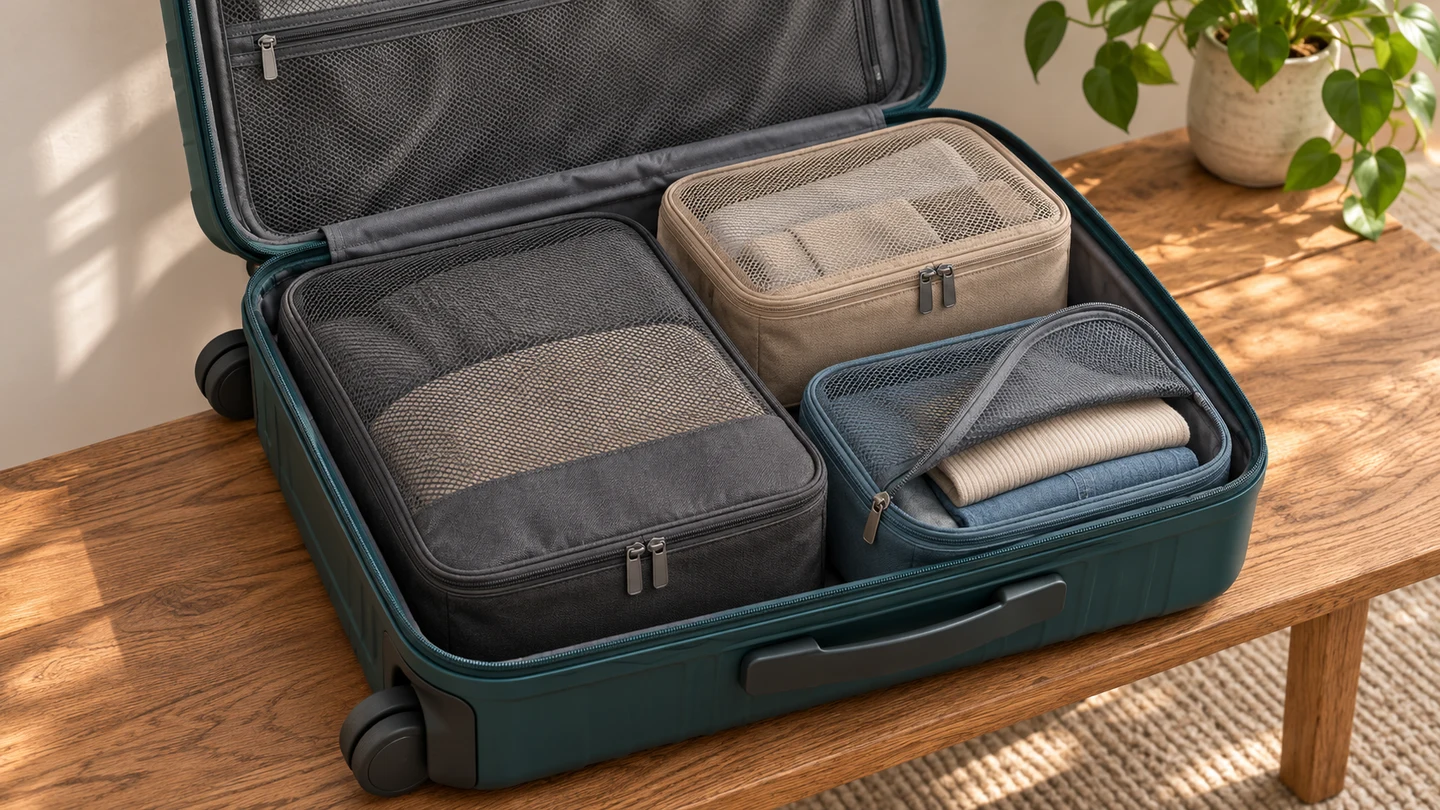
Quick AnswerStart with two or three cubes sized to fit side by side in your bag. Choose mesh cubes when you want to see what’s inside, or compression cubes when you regularly pack bulky, compressible clothes. Measure the usable space inside your suitcase before buying a set.
Compare Packing Cube Types
| Type | Best for | What to check |
|---|
| Standard mesh cube | Sorting everyday clothes and seeing the contents at a glance | Openings, zipper access, and packed height |
| Compression cube | Reducing the bulk of sweaters and other soft layers | A separate compression zipper and space to close it without forcing it |
| Two-sided clean/dirty cube | Keeping worn clothes separate on a longer trip | Divider design and how the two sides share space |
1. Measure the Space You Can Actually Use
Measure the inside width, length, and depth of each suitcase compartment. Account for wheel housings, handle rails, and dividers. Sketch how a few cubes could fit together, then check their packed depth. A cube that fits flat may bulge when filled.
2. Pick Sizes for the Clothes You Pack
Use a small cube for socks and underwear, a medium one for shirts, and a larger one for layers if your bag has room. In a split-shell carry-on, several shallow cubes are often easier to arrange than one deep cube. In a backpack, narrow cubes can make better use of the space.
3. Decide Whether Compression Is Worth It
A compression zipper draws the sides together to reduce the volume of soft clothes. The contents weigh the same, and stiff items compress very little. If you mainly pack shirts or want quick access at each stop, standard cubes may be simpler to live with.
4. Look at Zippers, Mesh, and Handles
A zipper that opens around most of the cube lets you load folded clothes without stuffing them through a narrow opening. Mesh makes the contents easy to identify, while a solid panel hides them. If you use a handle to lift a full cube, check where it’s stitched to the bag.
Buying tipArrange sheets of paper cut to the cubes’ published lengths and widths in your suitcase. This makes it easier to spot gaps around the wheels and decide whether you need a different size mix.
What to Buy for Your Trip
| Trip or luggage | Look for |
|---|
| Weekend with a carry-on | Two shallow mesh cubes and an optional small one for socks |
| Winter trip | A compression cube for soft layers and a regular cube for basics |
| Backpack travel | Narrow, lightweight cubes that lift out individually |
| Several hotel stops | Easy-open mesh cubes and a separate space for worn clothes |
Common Mistakes
- Buying a large set before measuring the bag.
- Assuming compression lowers luggage weight.
- Forcing the compression zipper over an overfilled cube.
- Using a single deep cube in a shallow compartment.
Before You Buy
- Measure the inside of your bag and note any obstructions.
- Choose sizes around the clothes you pack most.
- Check zipper access and packed depth.
- Decide whether visibility or compression matters more.
- Leave room for bulky items that travel outside the cubes.
Bottom Line
Start with a small set that fits your suitcase and the clothes you actually carry. Mesh cubes make sorting easy. Add a compression cube if you often run out of space because of soft, bulky layers.

Comments
Comments are reviewed before they become public.
Sign in with Google to leave a comment.
Sign in with GoogleNo approved comments yet. Be the first to start the discussion.