Choose a colander that drains your usual batch, keeps small food from escaping, and sits securely in or across your sink.
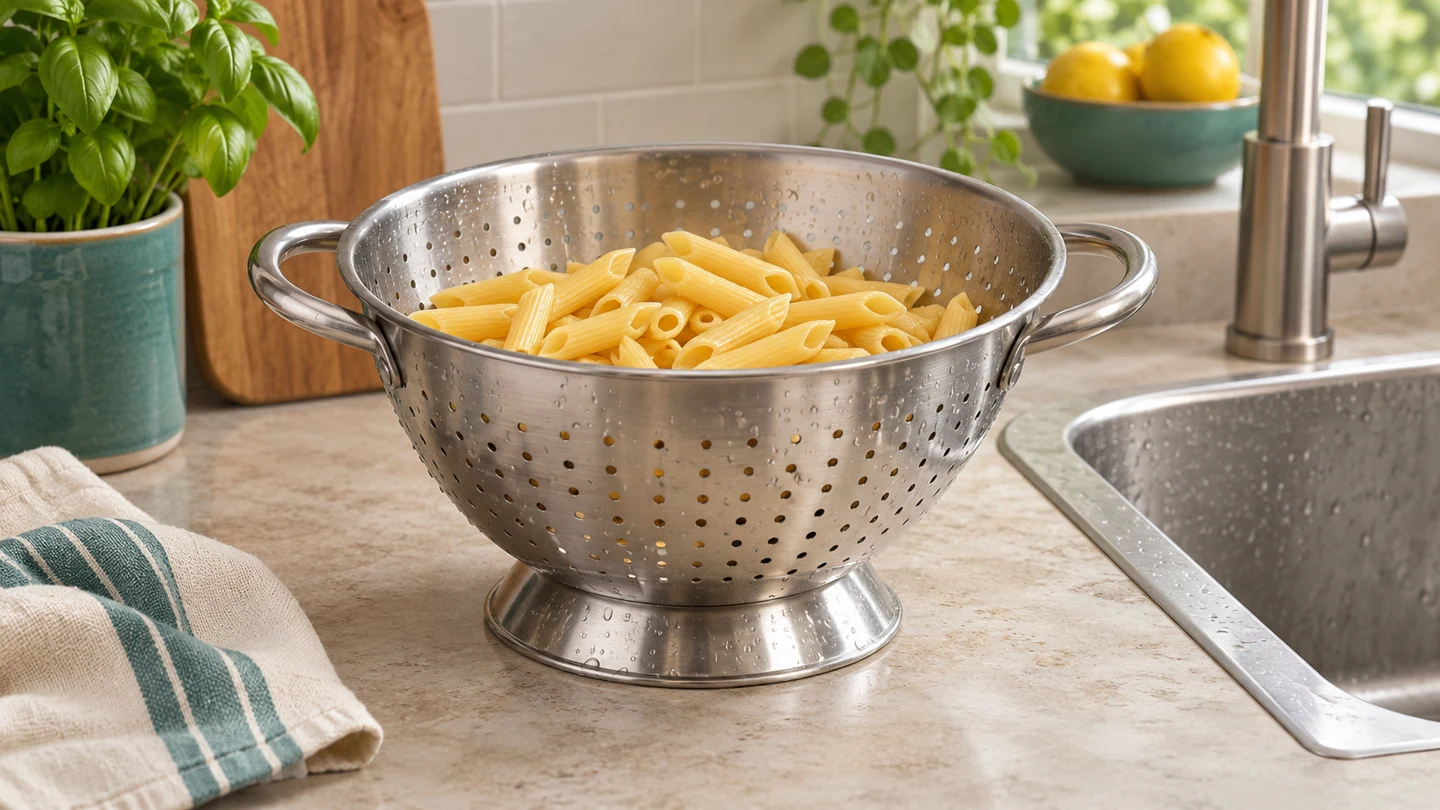
Quick AnswerA footed colander with holes across the base and lower sides works for most pasta and vegetables. Choose small perforations for thin noodles or lentils. If you want the sink floor clear, measure the span before buying an over-the-sink basket.
Compare Your Options
| Type | Best for | What to check |
|---|
| Footed perforated bowl | Pasta and everyday vegetables | Stable base and holes near the bottom |
| Over-the-sink mesh basket | Rinsing while keeping both hands free | Arm extension and usable sink ledges |
| Collapsible basket | Small kitchens and compact storage | Whether the sides stay open under a full load |
1. Match the holes to the smallest food
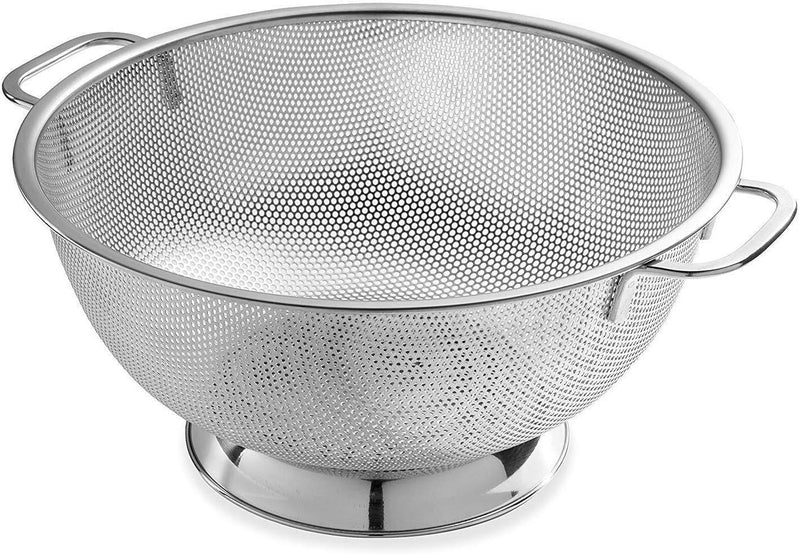
Hold the dry pasta shape you cook most often against a ruler. Look for openings that drain quickly while retaining that shape. Small perforations also help with lentils. Very small grains such as quinoa usually call for a fine-mesh strainer. A broad area of holes can drain well even when each hole is small.
2. Measure the sink, including the ledges
A pedestal needs a flat landing and enough space around it for water to flow away. For an expandable basket, measure between the two surfaces where its arms will rest. A rounded sink lip or a low faucet can reduce the usable space even when the basin width looks right.
3. Plan for the lift after draining
Capacity should leave some room above your usual batch so pasta stays inside as you lift it. Check the handles in a side view. Wide open loops are easier to reach around a full bowl. Mesh rinses grains well, while smooth perforated metal can be easier to wipe after draining starchier food.
Buying tipCheck the widest dimension with both handles included. A colander can fit your sink perfectly and still be too wide for the shelf where it will live.
What to Choose for Your Kitchen
| When you’re cooking | Look for |
|---|
| Spaghetti for the family | A footed basket with small holes and ample capacity |
| Rinsing greens as you prep | An over-sink design that rests firmly on both edges |
| A small apartment drawer | A collapsible basket with a stable expanded base |
Common Mistakes
- Comparing rim diameters while ignoring the pedestal footprint.
- Choosing wide slots for thin noodles.
- Using the manufacturer’s maximum arm extension as the bowl capacity.
Before You Buy: A Quick Checklist
- My usual food stays inside the holes.
- The base or arms have a stable landing.
- I can lift, rinse, and store the full-width basket.
Bottom Line
Choose around the sink and the food together. A secure landing, the right hole size, and usable handles make a bigger difference than an extra quart of advertised capacity.

Comments
Comments are reviewed before they become public.
Sign in with Google to leave a comment.
Sign in with GoogleNo approved comments yet. Be the first to start the discussion.