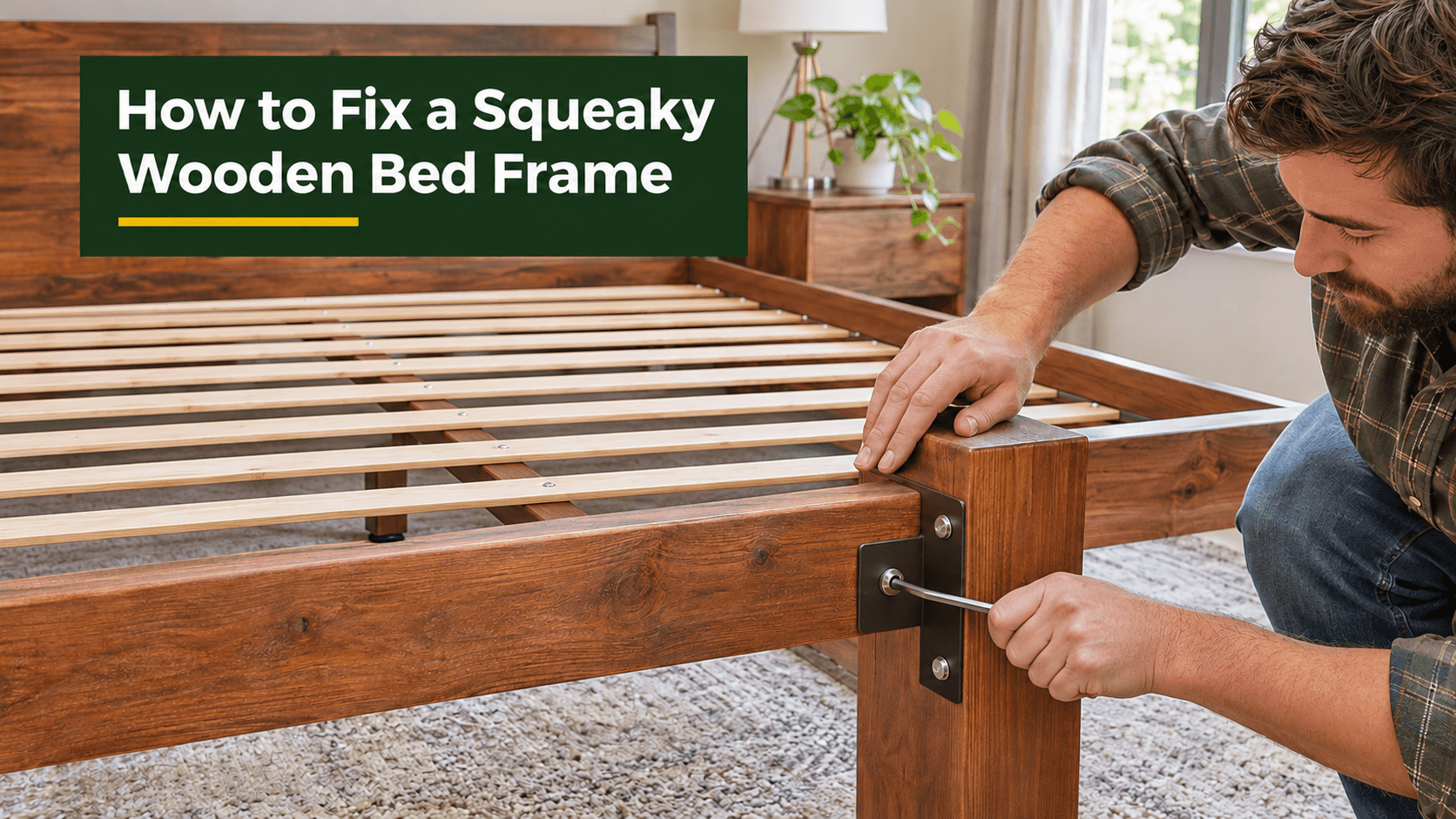
Find and fix a squeaky wooden bed frame by checking joints, slats, support legs, and floor contacts, with safe repair limits and model-specific guidance.
A squeaky wooden bed does not always need new hardware or lubricant. Noise can come from a loose rail connection, a slat rubbing its support, a foot shifting on the floor, the headboard touching the wall, or the mattress itself. Changing all of those at once makes it difficult to find the real cause.
This guide covers maintenance of a sound, ordinary wooden bed frame with owner-accessible assembly hardware. It excludes bunk and loft beds, wall beds, powered adjustable frames, lift-up storage mechanisms, and structural repairs to cracked wood or failed joints. Use your exact bed's assembly and care instructions throughout.
As an Amazon Associate, TeachMeHow earns from qualifying purchases.
Quick Answer: Reproduce the noise gently, separate mattress noise from frame noise, remove the mattress safely, and inspect the rails, slats, center support, and feet. Retighten only the correct original hardware as instructed. Restore displaced supports and use manufacturer-approved contact pads only where needed. Reassemble fully and test with normal use; stop if wood is cracked, a fitting will not tighten, or the frame still moves.
Project at a glance
| Plan | Allowance |
|---|
| Difficulty | Beginner to intermediate for diagnosis and accessible fastener maintenance. |
| Active time | About 45–120 minutes, with a helper for mattress handling. |
| DIY budget | Illustrative allowance: $0–$50 for suitable hand tools or approved contact pads; replacement parts are separate. |
| Success criterion | A stable, correctly assembled bed with the source of noise identified—not merely a temporarily silenced crack. |
These allowances assume a sound frame and a manageable mattress. A heavy mattress, missing instructions, or inaccessible fittings may justify professional assistance before any parts are loosened.
Tools and materials checklist
- The exact assembly manual, model label, and any supplied tools.
- Correctly sized hex keys, screwdriver, or wrench for the actual fittings.
- Flashlight, pencil, labels, and a small hardware tray.
- Tape measure and level for checking layout and floor-contact problems.
- Soft cloth and a vacuum for accessible dust and debris.
- Original replacement pads, feet, slat caps, or other manufacturer-approved parts if needed.
- A helper and a clear place to set the mattress safely.
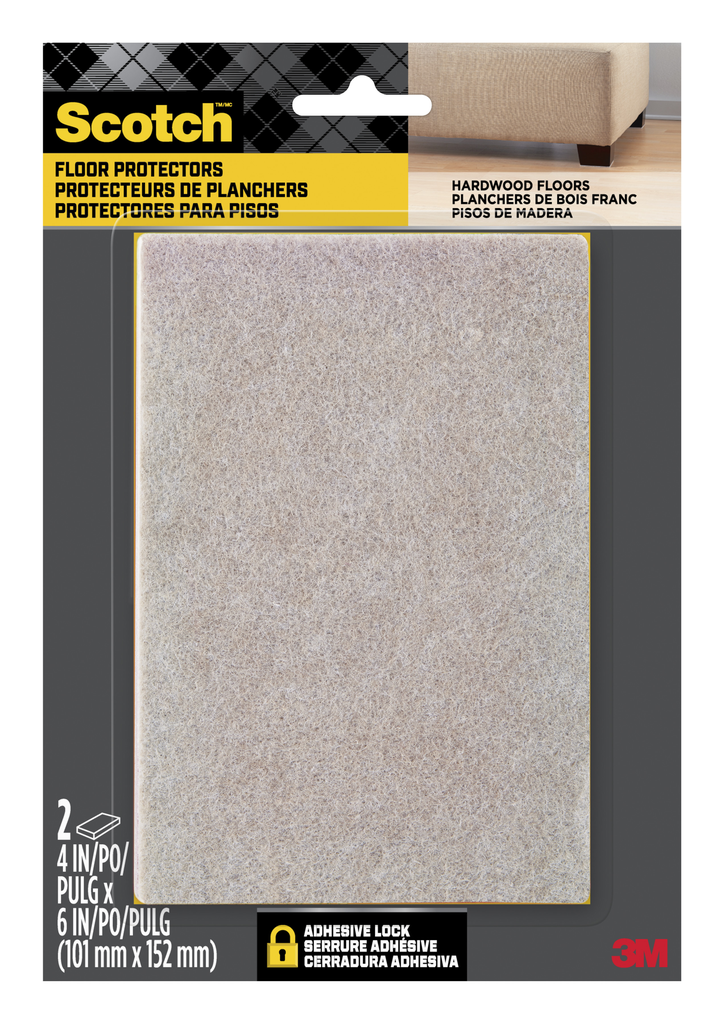
The suggested Bondhus set contains metric hex keys; it is useful only if the bed has matching metric sockets and enough tool clearance. Cuttable Scotch felt is a possible floor-contact material where the bed and flooring makers permit it. Neither product repairs a damaged joint.
1. Reproduce the sound without stressing the bed
Remove loose objects from beside and under the bed, then sit down and shift position normally while another adult listens. Do not jump, bounce hard, or have someone crawl beneath the occupied frame. Note whether the sound occurs at the head, foot, side rail, or center.
Watch for visible movement at a connection or foot. A click from a nearby nightstand, a headboard knocking the wall, or a creaking floor can resemble frame noise. IKEA's bed-noise guidance identifies several possible sources, including mattresses, slats, frames, and legs. Record a short sequence—such as sitting on the left edge—so you can repeat the same gentle test after each correction.
2. Find the model instructions and check the scope
Look for the model label or purchase record and retrieve the correct assembly manual. Compare the actual rails, brackets, slat system, and support legs with the drawings. A similar-looking bed may use a different fastener length, assembly order, or support arrangement.
Check recalls or safety notices with the manufacturer if the model is known to have a problem. Stop using the bed if you find a split load-bearing member, an unstable connection, or missing required support. Do not substitute internet advice for instructions on a specialized mechanism. Make a simple list of what is accessible and what would require disassembly; maintenance should not turn into an unsupported partial dismantling.
3. Separate mattress and foundation noise from frame noise
Strip the bedding and, with help, remove the mattress according to its handling instructions. Keep it supported and clear of exits; do not balance a heavy mattress where it could fall. If the bed has a separate foundation, assess that component too.
Listen while gently checking each unloaded component in a safe supported position. Avoid bending a mattress beyond its permitted limits or opening its cover to investigate springs. If the sound follows the mattress or foundation while the empty frame is quiet, contact that product's manufacturer. Tightening the frame will not repair a broken internal spring. A room's acoustic treatment can change echo, but it does not eliminate mechanical rubbing inside a bed.
4. Inspect the unloaded frame and its supports
With the mattress removed, inspect rail ends, brackets, bolt holes, slats, slat caps, and the center support. Use a flashlight from beside the bed rather than placing your body underneath an unsupported assembly. Look for cracked wood, bent metal, crushed bearing surfaces, missing parts, and fittings pulling out of the wood.
Confirm that the slats are the correct type and arrangement for both the bed and mattress. Do not invent a universal slat spacing or replace a shaped slat with an arbitrary board. If a slat is broken or a rail ledge is separating, obtain the correct part or qualified repair. Photograph the original arrangement before lifting any removable component.
5. Retighten the correct assembly hardware carefully
Use the exact tool that fully fits the fastener. Start with the original supplied key if available. Keep the bed unloaded and maintain support while working. Follow the manual's tightening order and torque requirement, if one is given; there is no universal torque for wooden bed fittings.
Turn by hand with controlled force. Do not use an impact driver, an extension pipe, or a nearly fitting imperial key in a metric socket. Hold the matching nut or barrel fitting as directed rather than allowing it to spin. Stop if the bolt turns endlessly, the insert moves, or the wood compresses. Longer screws, extra washers, glue, and threadlocker change the assembly and require manufacturer approval.
6. Restore slat seating and original contact protection
Check whether each slat or slat assembly sits fully in its intended holder or on its designated rail. Replace displaced caps and restore missing original felt or isolation strips with approved parts. Make one correction, then repeat the gentle unloaded check before adding another material.
IKEA describes padding the contact between wooden slats and metal supports on suitable beds. That is a specific contact treatment, not permission to cushion every structural joint. Use the bed maker's specified strip and thickness whenever possible. An improvised thick pad can lift a slat out of its holder, reduce engagement, or alter the mattress support height. Do not put pads between tightened rail-to-post mating faces unless the assembly instructions call for them.
7. Check the center beam and all floor-contact points
Confirm that the center beam is seated in its brackets and that each required support leg is installed in the correct location. Adjust threaded feet only as the manual directs. A leg that floats above the floor or pushes the frame out of alignment can create movement and noise.
Check the actual floor rather than assuming that equal leg settings produce equal contact. Do not stack cardboard, loose wood scraps, or soft pads beneath a structural center leg to disguise a support problem. If a threaded foot is at its limit, the floor is significantly uneven, or a support is missing, ask the manufacturer for the proper solution. Keep all load-bearing contacts stable before proceeding.
8. Resolve wall and floor rubbing where permitted
If the headboard touches the wall during normal movement, reposition the bed with help while keeping its feet supported. Do not drag it across the floor or lever against the headboard. Maintain any required manufacturer clearance and avoid trapping cords behind it.
For compatible hard-floor contact, the Scotch felt-pad guidance describes self-adhesive protection on furniture feet. Cut a pad to fit the actual contact surface and apply only to a clean, dry, approved surface. Felt can make furniture slide more easily, so it is unsuitable where the bed needs a different non-slip solution. Use our felt-pad installation guide for basic preparation principles, while following the bed's own support requirements.
9. Reassemble completely and test under normal use
Return every removed slat, retainer, foundation, and mattress in the proper order. Check the manual's final assembly list before loading the bed. Do not test a frame with a rail, center leg, or required slat temporarily omitted.
Repeat the original gentle test with a helper listening from beside the frame. Compare the same position and movement rather than escalating to vigorous bouncing. If the noise is gone but the frame still shifts, the repair is incomplete. If noise remains, record which component now responds and return to diagnosis. A new creak after tightening may mean the original noise masked another contact point; it is not a reason to tighten every fitting harder.
10. Record the correction and maintain the bed
Write down the noisy location, what you changed, and any replacement part numbers. Save the manual and photograph the completed support arrangement. Recheck the corrected area after normal use according to the manufacturer's schedule, especially after moving or reassembling the bed.
IKEA's maintenance guidance includes retightening fittings after initial use and periodically thereafter; the schedule for your exact bed controls. Its TONSTAD care instructions, for example, call for regular checking and retightening when necessary. If a fitting repeatedly loosens, seek the cause rather than treating repeated tightening as a permanent repair. Check that floor pads remain attached and have not collected abrasive grit.
Compare likely causes and remedies
| Finding | Appropriate response |
|---|
| Loose sound assembly joint | Retighten original fittings as directed; stop if threads or inserts fail. |
| Slat rubbing its support | Restore seating and approved contact strips or caps. |
| Foot shifting or headboard touching | Correct the position or permitted floor-contact treatment. |
| Mattress or foundation noise | Use that product’s care, warranty, or replacement process. |
| Cracked rail or failed support | Stop using the bed and obtain a proper part or structural repair. |
Professional tips and alternative approaches
Change one variable at a time. Tightening, repositioning, and padding everything together may hide the cause and make the problem harder to diagnose later. Keep removed hardware in labeled groups and compare it with the parts drawing before reinstalling it.
Choose the tool for access, not leverage. A folding hex set is convenient in an open area, while the supplied L-key may fit a recessed bracket better. The Bondhus 12587 set includes 2, 2.5, 3, 4, 5, 6, and 8 mm sizes; none should be forced into a different socket. A manufacturer-approved service visit is a better alternative when the mattress is too heavy or the connection cannot be reached safely.
Common mistakes to avoid
- Spraying lubricant everywhere: it can contaminate finishes, adhesives, and fabrics without correcting a loose joint.
- Using excessive torque: crushing wood or stripping an insert makes the repair worse.
- Adding thick padding blindly: it may interfere with slat retention or support geometry.
- Ignoring a center foot: quiet side rails do not compensate for missing support.
- Testing by jumping: normal gentle movement is enough to reproduce most complaints.
Safety and when professional repair is needed
Keep hands clear of pinch points while a helper moves the mattress or frame. Never work beneath a bed supported only by a person, a tilted rail, or improvised blocks. A broken fastener, enlarged hole, cracked rail, detached support ledge, or failed glued joint needs a manufacturer-approved part or competent furniture repair. Specialized beds and children's elevated beds require their own procedures. A quieter frame is not proof of structural safety.
DIY versus professional cost
| Option | Illustrative planning allowance |
|---|
| DIY maintenance | $0–$50 when sound hardware only needs adjustment or an approved pad. |
| Furniture service visit | Allow roughly $100–$250 for diagnosis and basic labor, then obtain local quotes. |
| Structural parts or repair | Quote separately; compare repair quality and total cost with a suitable replacement frame. |
Give the repairer the model, photographs, the location of the noise, and details of missing or damaged parts. These estimates are budgeting examples, not promised local service rates.
Frequently asked questions
Should I put wax on every wooden joint?
No. Wax can interfere with a joint that depends on secure mating surfaces or later adhesive repair. Use a lubricant only when the bed manufacturer specifies the location and product.
Can I add washers to stop a loose bolt?
Only with approval for that fitting. Extra washers change engagement length and clamping geometry. First check that the original parts are present and correctly assembled.
Is any felt suitable under the slats?
No. Prefer original isolation strips or a specified equivalent. Thickness, placement, adhesive compatibility, and slat retention all matter. A floor-protection pad is not automatically a slat-system part.
Why does the bed squeak only when someone lies on it?
Loading changes contacts and can reveal looseness that is not obvious when empty. Diagnose gently with a helper listening beside the bed, then unload it before making adjustments.
When should I replace the frame?
Consider replacement when required parts are unavailable, structural damage cannot be reliably repaired, or the frame repeatedly fails despite correct assembly. Do not keep using a damaged bed simply because padding suppresses the sound.
Final project checklist
- Noise source identified and model instructions checked.
- Rails, slats, fittings, and supports inspected for damage.
- Correct original hardware secure without excessive force.
- Slats retained and all required feet properly supported.
- Any pads approved, correctly fitted, and free of loose layers.
- Bed fully reassembled, stable, and tested with normal movement.
Bottom Line: Fix a squeaky wooden bed by locating the movement and restoring the intended assembly. Careful tightening, proper slat seating, and suitable contact protection can solve ordinary noise, while damaged wood or failing fittings need a real repair rather than a quieter workaround.
Sources

Comments
Read or join the discussion.