Clean reachable gutters from the ground with approved tools, safe electrical clearances, debris control, drainage checks, cost guidance, and clear stop points.
Quick Answer: Clean gutters from the ground only when an approved gutter attachment reaches comfortably from firm, level footing and the entire tool stays safely clear of overhead wires. Inspect the site, fit a compatible blower attachment, wear the required protection and remove dry loose leaves in small sections while controlling falling debris. Stop for excessive height, unsafe footing, power-line proximity, damaged gutters, compacted blockages or hidden obstructions. Do not add a ladder, climb onto the roof or improvise extra pole sections.
Ground-based gutter cleaning can make routine leaf removal more manageable, especially on an uncomplicated low roofline. It still requires a deliberate plan. A long attachment can strike wires or windows, throw grit into your eyes, and become difficult to control before it reaches the gutter.
This guide explains a conservative ground-only method for reachable open gutters, using a manufacturer-approved blower attachment for dry debris. It also covers suitable alternatives and how to recognize work that belongs with a professional. As an Amazon Associate, TeachMeHow earns from qualifying purchases.
Project at a glance
| Item | Planning allowance |
|---|
| Attachment | About $40–$90 when a compatible blower is already owned |
| Other supplies | About $15–$50 for protection, bags or a tarp if needed |
| Time | 1–3 hours for an uncomplicated reachable run and cleanup |
| Difficulty | Moderate; safe reach and control determine suitability |
These are illustrative budgeting allowances, not current prices or guaranteed quotes. A new blower or specialized pole system costs extra. A professional visit can be the better purchase when your home does not suit the equipment.
Tools and materials checklist
- An approved ground-use gutter attachment and a confirmed compatible blower.
- The manuals for both the attachment and the blower.
- Well-fitting protective goggles, hearing protection and any respiratory protection the tool instructions require.
- Gloves, closed footwear with secure traction and suitable clothing.
- A rake, collection bags and a tarp positioned clear of your standing area.
- A phone camera with zoom or binoculars for preliminary ground observations.
- For a corded blower, a sound outdoor-rated cable of the required gauge and length, with GFCI protection.
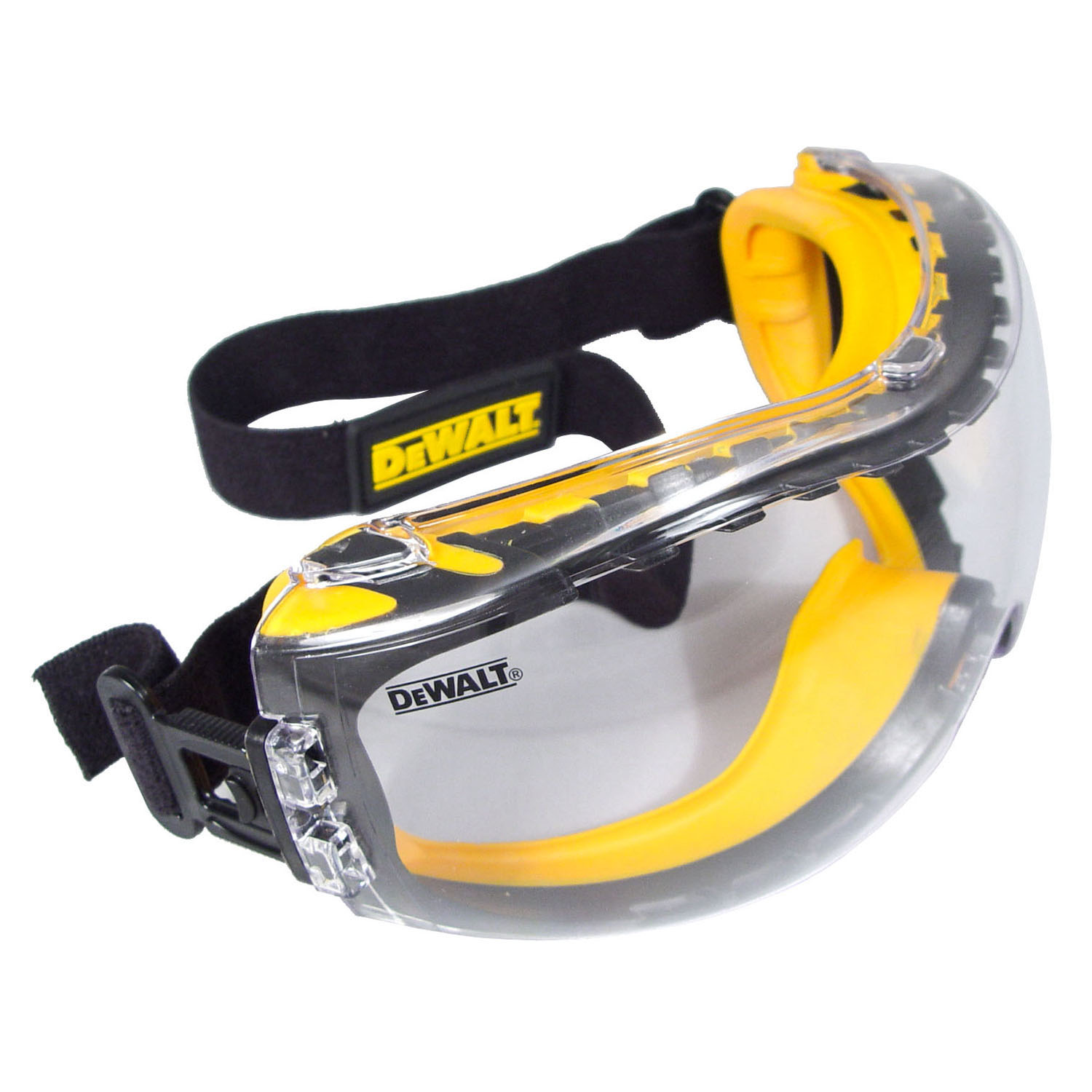
The WORX WA4092 kit is one example, not a universal fit for every blower or building. The manufacturer describes 8 feet of tubing and up to 11 feet of working reach, and excludes Turbine Fusion blowers. DEWALT DPG82-11 goggles are a relevant debris-protection option; fit and the rest of the blower’s safety requirements still matter.
1. Inspect the roofline and ground access
Walk around the home without raising any equipment. Identify gutter runs, downspout outlets, covers, sagging sections and places where the roofline changes height. Look for loose brackets, visibly separated joints, vegetation growing in gutters or signs that water has been spilling behind them.
Check where your feet would need to go. Steps, steep slopes, slippery paving, narrow side yards and obstacles can make an otherwise low gutter unsuitable. Do not plan to stand on bins, chairs, retaining walls or a ladder to add reach. A photograph may reveal an obstruction, but a clear-looking image does not prove the whole gutter is clean.
2. Set an overhead-line and weather exclusion zone
Locate every overhead wire, including the service line entering the house. Think about the full arc of the tool while carrying, raising, using and lowering it—not just the nozzle’s final position. ESFI advises keeping people and tools at least 10 feet from power lines and contacting the electric company when work is needed nearby.
If you cannot maintain safe clearance, stop and arrange the appropriate utility or professional assistance. Follow any larger required clearance; ten feet is not permission to work near an unknown electrical hazard. Assume lines are energized. Plastic or fiberglass components do not make an assembled, dirty or wet tool safe around electricity.
Choose calm, dry weather with good visibility. Postpone work in rain, gusts, lightning, ice or conditions that compromise footing. Check the forecast before assembling the equipment.
3. Match the method to the debris and actual reach
| Condition | Suitable response |
|---|
| Dry loose leaves | Approved blower attachment within comfortable reach |
| Damp leaf clumps | A compatible ground grabber, if its instructions and site allow |
| Heavy mud, roots or lodged objects | Professional inspection and removal |
| Covered, damaged or unreachable gutter | Professional service appropriate to the system |
Measure or establish the gutter height safely from the ground and compare it with the tool’s specifications. The WA4092 product page distinguishes tube length from working reach. Neither number guarantees comfortable access at your operating angle. If you must fully stretch, lift the blower awkwardly or lose control, the setup does not fit the job.
Confirm the exact blower model and adapter requirements. A nozzle diameter that seems close is not enough. Never join multiple kits or tape on improvised pipes to reach a second story.
4. Clear the work zone and put on protection
Move people, pets and vehicles out of the debris path. Close nearby windows and doors, protect delicate items and plan where the leaves will land. Keep helpers out from beneath the gutter and away from airflow. Do not operate if someone may unexpectedly walk through the work area.
Wear goggles that fit securely and let you see clearly while looking upward. Check the lenses and strap before use. Add hearing and respiratory protection as specified by the blower manual. If dust becomes excessive or visibility deteriorates, shut down and change the conditions rather than continuing blindly. Do not blow active nests or accumulations of animal droppings into the air; arrange appropriate removal.
5. Assemble and inspect the attachment with power disconnected
Switch off the blower and disconnect its power source as its manual requires before attaching parts. Inspect tubes, joints and retaining hardware. Fit only the supplied or manufacturer-approved sections needed for comfortable reach, and engage every connection fully.
The WORX WA4092 manual requires checking that the adapter will not slide off the blower outlet. Follow the exact attachment position and operating configuration for your blower; some multifunction blowers have model-specific arrangements. Do not guess which opening to use or remove required guards.
For a corded blower, route the cable away from your feet, water and sharp edges. Use GFCI protection and the correct outdoor cord, not chained extensions. ESFI’s cord guidance emphasizes suitable ratings and inspecting for damage.
6. Practice positioning before cleaning
With the power still disconnected, establish a stable stance and rehearse the motion to the first section. Keep the assembly balanced and avoid placing yourself directly under the falling-debris path. The nozzle should reach the intended position without bearing your body weight or the tool’s load on the gutter.
Lower the equipment before changing its angle or adding an approved section. Recheck wires and obstacles whenever you move to a new run. When ready, follow the blower’s starting procedure and make a brief controlled pass. Stop if recoil, vibration or fatigue prevents precise handling. A manufacturer’s advertised reach is not a reason to push beyond your comfortable control.
7. Clear dry leaves in short, controlled sections
Work a small area at a time with the nozzle positioned according to the attachment instructions. Direct debris into the cleared collection area rather than toward people, glass, vehicles or neighboring property. Avoid deliberately driving a pile into a downspout opening, where it can become a compacted blockage.
Pause to assess what is coming out. Loose leaves are different from gravel, roofing fragments or unexpectedly heavy objects. Do not scrape the gutter with the tube, force it past a hanger or use it as a pry bar. Switch off and lower the equipment before repositioning. Before handling joints, changing attachments or clearing a jam, wait for all moving parts to stop and isolate the power source: unplug a corded blower, remove a battery, or follow the gas blower’s prescribed isolation procedure.
Keep the collection area tidy as you progress. A tarp covered in damp debris can become a slip hazard, so keep it beside the work route rather than underfoot.
8. Stop and reassess stubborn material
If leaves remain stuck, do not compensate by forcing the attachment, adding length or raising yourself onto something. Shut down and inspect from the ground. A gutter cover, bracket, wet mat or damaged section may be preventing the tool from doing its intended job.
A manufacturer-approved ground grabber is an alternative for suitable leaf clumps. Gutter Sense’s instructions require a proper pole, secure angle adjustment and controlled lifting; they prohibit ladder use, twisting, yanking, whipping the pole and picking up heavy objects. Follow both the grabber and pole instructions. If the assembly cannot be handled safely or the obstruction remains, hire a gutter service.
9. Check drainage without adding an unsafe access step
Inspect accessible downspout outlets and removable ground-level extensions. Remove loose debris at those openings only when you can do so safely without dismantling an unstable stack. Do not push a hose blindly into a buried drain or use a pressure washer to attack an unseen blockage.
After dry cleaning, a visual check cannot fully confirm drainage. If you already have an approved garden-hose gutter tool that reaches safely, follow its instructions for a gentle water test after disconnecting and putting away electric cleaning equipment. Keep water away from electrical equipment and do not direct it upward beneath roofing.
Otherwise, observe the next ordinary rain from a safe sheltered position. Look for outlet flow, overflowing corners, leaking joints or water behind the gutter. Do not go outside during lightning or severe weather. Persistent overflow needs diagnosis even when many leaves have been removed.
10. Clean up and plan the next inspection
Collect leaves and bag or compost appropriate clean plant debris according to local rules. Keep grit and litter out of storm drains. Disconnect the tool, clean it as instructed and inspect joints before storage. Before reopening nearby windows, check their screens for damage; our window-screen replacement guide covers torn mesh in safely removable frames. Record any section you could not reach or verify rather than treating it as finished.
Schedule ground inspections around your local leaf fall and after storms. Homes below shedding trees may need attention more often than open sites. Lowe’s maintenance guidance recommends spring and fall cleaning checks and observation around heavy rain. Your site’s debris pattern determines the practical interval.
Professional tips and common mistakes
- Work before debris forms a mat. Frequent light maintenance can suit a blower better than a long-neglected blockage.
- Separate length from reach. Compare the actual operating position, not a headline number on a box.
- Check the adapter each session. A connection that fitted last season still needs inspection.
- Keep one task at a time. Put electric tools away before introducing water for a separate drainage check.
- Respect gutter guards. Do not pry them off from below or assume they eliminate maintenance.
- Investigate recurring overflow. Poor fall, damaged joints, a blocked downspout or an undersized drainage system needs more than leaf removal.
If the outdoor water supply leaks, address it with our outdoor faucet repair guide before using a hose. Drainage problems also matter when planning pavers over a concrete patio or investigating driveway cracks; cosmetic repairs do not correct the cause of persistent water pooling.
DIY versus hiring a professional
| Option | Illustrative budget and scope |
|---|
| DIY with an existing blower | $40–$90 for a suitable attachment, plus missing safety supplies |
| New equipment setup | Add the blower or pole cost; compare the total with a service quote |
| Professional cleaning | Allow $125–$300 or more for an uncomplicated home; obtain a site quote |
These examples are not surveyed market rates. Ask whether the quote includes debris removal, downspout checks, guard removal and inspection of inaccessible sections. Height, roof shape, gutter length, access and blocked drains can raise the cost. Choose a suitably insured service for work beyond safe ground-tool access; electrical service-line concerns may require coordination with the utility.
Frequently asked questions
Can I clean second-story gutters with extra extension tubes?
Do not add unapproved sections or combine kits to gain height. Long assemblies can become unstable and approach overhead wires. Use only the manufacturer’s permitted configuration within comfortable control; otherwise arrange professional cleaning.
Will a blower remove wet leaves and mud?
A blower attachment is best suited to loose dry debris. Wet mats and heavy sediment may remain or scatter unpredictably. A compatible ground grabber may handle some clumps, but rooted growth, heavy deposits and inaccessible obstructions call for professional removal.
Can I use the attachment while standing on a ladder?
This guide does not combine long ground-use tools with ladders. If ground reach is insufficient, change the service plan. A ladder introduces a different access and fall-protection problem and is not an extension for this method.
How do I know the downspout is clear?
Visible outlet flow during a safe water test or ordinary rain is useful evidence. Leaves coming out of the gutter do not prove the downspout or buried drain is clear. Overflow that continues after cleaning needs further inspection.
Are goggles enough protection?
No. They address flying debris around the eyes but do not remove electrical, hearing, dust, falling-object or footing hazards. Follow the tool’s complete protection requirements and stop when the work zone cannot be controlled.
Do gutter guards mean I can skip cleaning?
No system should be assumed maintenance-free. Debris can collect on top, at roof valleys or around downspout openings. Follow the guard manufacturer’s maintenance method; forcing a blower tube beneath a cover can damage it.
Final project checklist
- Entire tool path checked for overhead wires and obstacles.
- Stable ground footing and comfortable approved reach maintained.
- Compatible attachment secured and required protection worn.
- People, pets and fragile property kept clear of debris.
- Loose debris removed without forcing brackets or guards.
- Drainage checked safely or a rain observation planned.
- Unresolved blockages, damage and inaccessible runs referred for service.
- Equipment disconnected, cleaned and stored; debris collected.
Bottom Line: Ground-level gutter cleaning works when the building, debris and approved tool fit together. Keep the task within comfortable reach, control the debris path and verify drainage afterward. Height, power lines, damaged gutters and stubborn blockages are reasons to change the plan and use professional help.
Sources and manufacturer instructions


Comments
Read or join the discussion.